
The best golf clubs for beginners are forgiving, properly sized, and simple enough to learn with. For most new golfers, a complete set with a driver, fairway wood, hybrid, cavity-back irons, wedge, putter, and bag is a more practical first purchase than assembling individual clubs.
Start with fit and the clubs you will actually use, not the biggest number printed on a box. A beginner can play with fewer than 14 clubs. In fact, fewer choices often make practice easier.
TL;DR: Which beginner clubs should you buy?
- Best simple starting point: Callaway Strata, provided the exact package has the clubs and bag you need.
- Best if fit options matter: Wilson Profile, which comes in different configurations.
- Best step-up package: Cobra FLY-XL, especially if you expect to play regularly.
- Best value alternative: A clean, correctly sized used set of forgiving clubs from a reputable seller.
- What to skip: Expensive blades, difficult long irons, and specialty wedges before you can hit your basic clubs consistently.
Affiliate disclosure: As an Amazon Associate, GolfCartBase earns from qualifying purchases. Recommendations are based on published specifications and independent research, not hands-on testing by GolfCartBase.
Shop the recommended starter set
The right-handed, standard men’s Strata 12-piece set is shown below. Check your size and handedness before ordering.
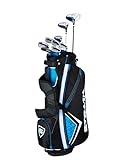
- The Strata 12-Piece Men's is designed to give you maximum performance right out of the box for more confidence from tee-to-green. The lightweight 460cc forged driver, fairway wood, hybrid, irons and putter make up a set that provides a great combination of distance, forgiveness and control, and is very easy to hit.

Best golf clubs for beginners: quick comparison
| Set | Best for | Check before buying |
|---|---|---|
| Callaway Strata | A straightforward first complete set | Different piece counts contain different clubs; check for a sand wedge |
| Wilson Profile | Golfers who need more size or configuration choices | Correct height, handedness, shaft and exact package |
| Cobra FLY-XL | Regular beginners wanting more long-game options | Club configuration, shaft material, bag type and total cost |
| Used game-improvement set | Value-conscious beginners willing to inspect clubs | Grip condition, shaft length, damage and missing clubs |
Manufacturers change package configurations. The number of “pieces” can include the bag and headcovers, so it does not necessarily equal the number of playable clubs.
1. Callaway Strata: a straightforward first complete set
Strata is worth considering when you want to buy one package and start practicing. The range typically combines woods, a hybrid, forgiving irons, a putter, and a bag. That removes several decisions that can overwhelm a first-time buyer.
The catch is that Strata is sold in multiple configurations. A smaller package may leave you without a sand wedge, while a larger one can add clubs you may not use immediately. Compare the actual club list, not just the piece count.
Choose it if: you want a practical, familiar starter package and the available shaft and length suit you. Skip it if: the package is missing a club you need or the fit feels wrong.
The Strata 12-piece specifications list nine playable clubs, including a 10.5-degree driver and a 26-degree 5-hybrid, plus a bag and two headcovers. The standard 12-piece configuration does not include a sand wedge. The product box above shows this version.
2. Wilson Profile: a better place to start when fit matters
Wilson Profile complete sets are designed around forgiving clubs and offer configurations for different golfers. This is particularly useful if a standard-length, standard-flex set feels awkward. A suitable shaft and club length can make a bigger difference to comfort than a more expensive logo.
Check the specific Profile version, handedness, iron shaft material and included bag. Some listings bundle different club combinations under similar names.
Choose it if: size and configuration options matter to you. Skip it if: the listing does not clearly identify the build you are purchasing.
The regular right-handed Profile SGI package shown here includes a sand wedge and a stand bag. Check other sizing options separately if standard clubs do not fit.

- Large 460cc Driver Engineered with Super Game Improvement technology to enhance new golfer experience
3. Cobra FLY-XL: a step-up option for regular play
The Cobra FLY-XL family is designed with forgiving woods, hybrids and cavity-back irons. Depending on the version, you may get more options at the long end of the bag than a basic starter package. That can be useful as your confidence grows.
Still, a more expensive package does not automatically produce better scores. A new golfer who plays twice a month may be better served by a simpler set and a lesson. Compare shaft choices, club makeup and bag style before paying more.
Choose it if: you plan to practice often and want a complete package with room to grow. Skip it if: the price would take money away from lessons or rounds.
The FLY-XL cart-bag configuration includes 11 playable clubs, with two hybrids and a sand wedge. This is a useful option if you usually ride and want more distance choices as your swing develops.

- ULTIMATE GOLF CLUB SET: The Cobra Fly-XL Complete Set includes a full bag of lightweight and forgiving clubs that deliver easy launch, distance, and maximum forgiveness - delivering a smooth, enjoyable experience for golfers of all skill levels.
4. Used game-improvement clubs: sometimes the smarter buy
A well-kept used set can offer good value. Look for cavity-back irons, a usable hybrid, a forgiving driver and a putter you can aim comfortably. A mixed set is fine if the clubs fit and the distance gaps make sense.
Inspect grips for cracking or slickness, shafts for bends or dents, and clubheads for serious damage. If you are buying online, ask for clear photos and a complete inventory. Budget for a bag and possible regripping. Buying used is less attractive when the clubs need expensive repairs.
Which clubs do beginners actually need?
A sensible starter bag can be smaller than a full set. The USGA Rules of Golf allow a maximum of 14 clubs during a round, not a minimum.
| Club | Why it belongs |
|---|---|
| Driver | For tee shots on longer holes; useful, but not essential for the first practice session |
| Fairway wood or hybrid | For longer shots when a long iron feels difficult |
| 7-iron and 9-iron | Good starting points for learning contact and distance control |
| Pitching wedge and sand wedge | For shorter approach shots, chips and bunker practice |
| Putter | For the green, where beginners can practice immediately |
If you already have a bag, learn to organize your golf clubs so the ones you use most are easy to reach. The bag itself matters too: our guide to golf bag types explains the differences between carry, stand and cart bags.
How to choose a beginner set without overspending
Check length and handedness first
Height alone does not determine the correct club length. Your wrist-to-floor measurement, posture and setup matter too. If possible, try a few clubs in a golf store or ask a teaching professional for a basic fit check. Do not buy an extended-length set solely because you are tall.
Look for forgiveness, not a professional-style appearance
Cavity-back irons with wider soles generally make it easier for newer golfers to launch the ball and manage imperfect strikes. A hybrid can be less intimidating than a traditional long iron. Avoid buying compact blade irons just because they look sleek.
Choose a shaft you can swing comfortably
Graphite shafts are often lighter than steel. Neither is automatically right for every beginner. Swing speed, tempo, strength and comfort should guide the choice. If you cannot test clubs, buy from a retailer with a clear return policy.
Check the bag against how you play
Walkers may prefer a lighter stand bag, while golfers who usually ride may appreciate more storage in a cart bag. Compare the trade-offs in our cart bag versus stand bag guide. If you expect to walk with a trolley, also see our push-cart bag guide.
What should a beginner skip?
- Fourteen clubs on day one: you can learn the game with fewer.
- Expensive specialty wedges: learn basic pitching, chipping and bunker shots first.
- Hard-to-hit long irons: try a hybrid before adding a 3- or 4-iron.
- A premium driver upgrade: spend on lessons and practice until you know what your swing needs.
- A package chosen only by price: an ill-fitting bargain can be frustrating.
Common questions
How much should a beginner spend on golf clubs?
Set a budget that leaves money for practice and instruction. Compare the total cost of the clubs, bag, balls and any needed adjustments. A correctly fitted, modest set is a better starting point than an expensive set that leaves no room for lessons.
Are complete sets better than individual clubs?
For most first-time buyers, a complete set is simpler. Individual clubs make more sense once you understand your distances, typical misses and preferred club types.
Do beginners need a driver?
Not immediately. You can learn solid contact with a short iron and a hybrid, then introduce the driver as your swing develops. A driver is useful for longer holes but not required for a first lesson.
Should beginners buy steel or graphite shafts?
Both can work. Graphite is often lighter; steel can feel different and is common in iron sets. Try both if you can, and prioritize a shaft weight and flex you can control.
Bottom line
Choose the beginner clubs that fit you, cover the basic shots and leave room in your budget to play. Callaway Strata, Wilson Profile and Cobra FLY-XL are sensible packages to compare, but the best purchase is the specific configuration that suits your build and commitment to golf.