
Short answer: the best EZGO RXV enclosure is the one that matches your passenger layout and roof length before anything else. A two-passenger RXV with a standard roof, a four-passenger RXV with a short roof, and a cart with an extended roof need different enclosure dimensions even though all are called “RXV.”
An enclosure is for driving in rain, wind, and cold weather. If you only need parked-cart protection, use an RXV storage cover instead. E-Z-GO’s current RXV line also includes multiple seating configurations, so measuring the actual cart remains important even when a listing says “RXV.”
What to check before buying an RXV enclosure
- Passenger count: 2-seat vs rear-facing 2+2/4-passenger.
- Roof length: standard/short roof vs extended roof.
- Model year: body and roof details can change across generations.
- Mirrors: side mirrors may need clearance through or around the enclosure.
- Windshield: confirm how the enclosure interfaces with an existing fold-down windshield.
- Door access: zippers should open without catching rear-seat armrests or roof supports.
RXV enclosures worth comparing
Affiliate disclosure: We may earn a commission from qualifying purchases. Verify exact roof length, seating layout, and model year before ordering.
Two-passenger TXT/RXV enclosure
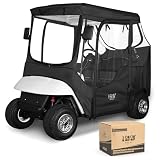
This type targets the standard two-seat layout. It is a practical choice when you do not have a rear flip seat or extended passenger roof.
Four-passenger RXV short-roof enclosure
This option is built around an RXV rear-seat conversion with a shorter roof. Check the roof measurement because a short-roof enclosure will not correctly cover an extended-roof cart.

Four-passenger RXV extended-roof enclosure
This is the category to compare when the roof extends over the rear passengers. Extended-roof fitment changes the enclosure length and door/window positions.

Fabric and clear-window quality
Enclosures live in difficult conditions: UV, rain, dust, zipper stress, and repeated rolling of clear panels. Heavier fabric can resist wind better but is bulkier to store. Clear vinyl/PVC should be kept clean and rolled carefully rather than sharply folded to reduce creasing.
Ventilation and fogging
Rainy or cold weather can fog an enclosed cart quickly. Look for doors and clear panels that can be partially opened without allowing the entire enclosure to flap. Keep vents open when safe, especially with multiple passengers.
Installation tips
Install the enclosure on a clean, dry cart. Start at the roof and center the enclosure before tightening lower straps. Check steering, mirrors, windshield movement, charging access, and rear-seat operation before final tensioning. Drive slowly at first and stop if the material balloons or a strap moves.
Do not confuse an enclosure with a storage cover
A storage cover usually has no driving windows and may block lights or mirrors. An enclosure is designed to remain on the cart while it moves. Our cover vs enclosure comparison explains the distinction.
Bottom line
For an RXV, choose the enclosure by passenger layout and roof length first. Then compare fabric, window clarity, zipper access, and ventilation. Exact physical fit matters more than a generic “fits EZGO” claim.
Short roof vs extended roof on a 4-passenger RXV
A rear seat does not automatically mean the cart has a long roof. Some conversions keep a roof over only the front seats, while others extend coverage over the rear passengers. This is one of the most common enclosure ordering mistakes. Measure the roof from the front edge to the rear edge and compare it with the seller’s listed roof length, not only the cart’s overall length.
Rear-seat access and cargo use
Many flip-seat kits convert into a cargo deck. Make sure the enclosure’s rear panel can move or open without preventing that function. If you regularly carry coolers or tools, a rear panel that rolls up cleanly is more practical than one that must be fully removed.
Cold-weather use
An enclosure reduces windchill but does not create heat by itself. If you add a heater, follow the heater manufacturer’s ventilation and clearance instructions. Never assume that zipping every panel closed is safest, especially with combustion heaters.