
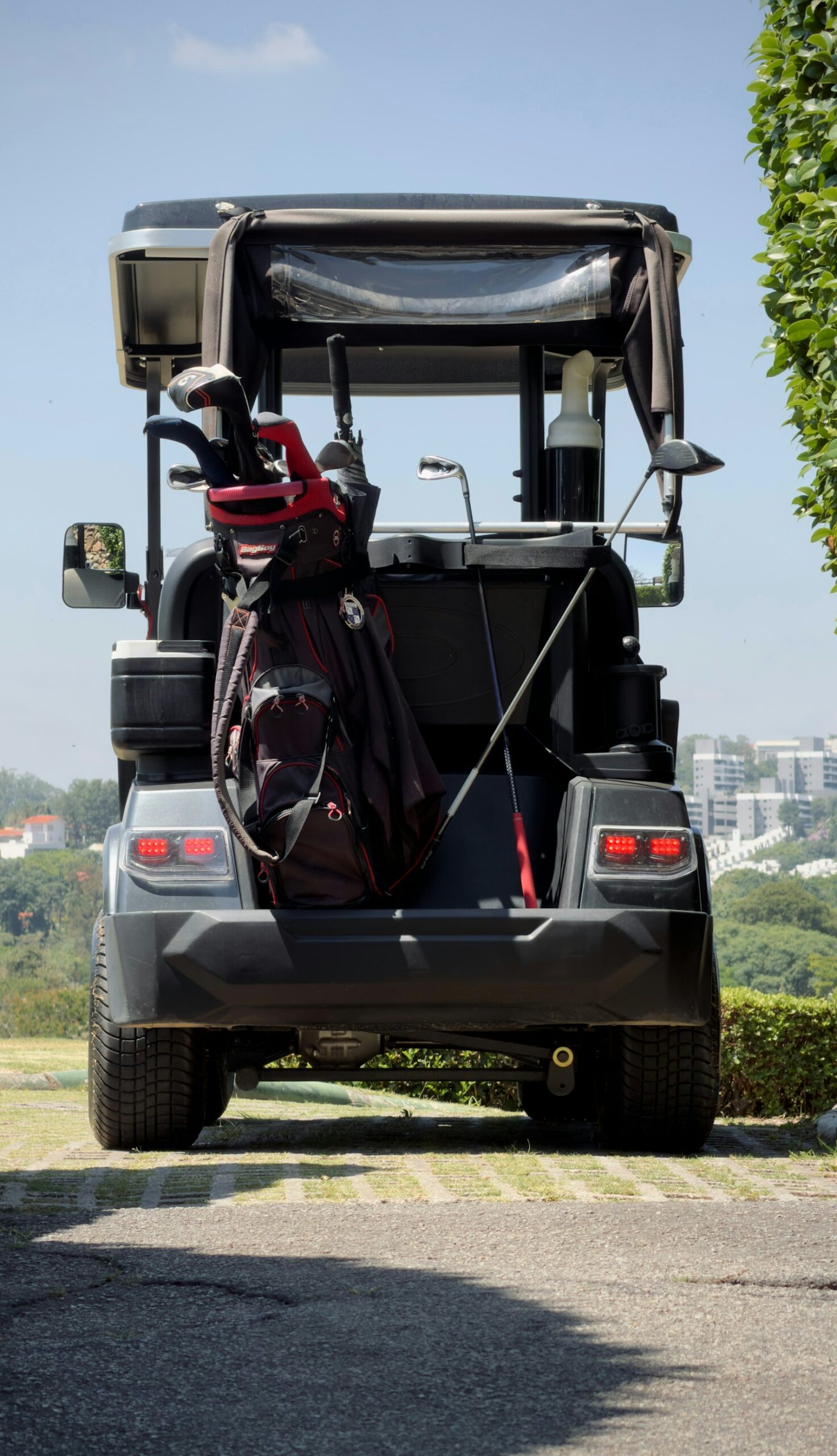
Short answer: choose a golf cart weather cover based on whether the cart is parked or being driven. A full storage cover protects a parked cart from rain, dust and UV. A driveable enclosure uses clear windows and zippered/roll-up doors so the cart can be operated in rain or cold wind.
This distinction prevents the most common buying mistake. Our cover vs enclosure comparison explains the difference in detail.
Storage cover vs driveable weather cover
- Storage cover: simplest, usually no clear windows, best for parked carts.
- 2-passenger enclosure: fits short-roof two-seat carts and keeps the driver area protected while moving.
- 4-passenger enclosure: must match short vs extended roof and rear-seat layout.
- 6-passenger enclosure: much longer and more sensitive to roof length and door spacing.
Current weather-cover options worth comparing
Affiliate disclosure: We may earn a commission from qualifying purchases. Measure roof length, passenger layout and overall cart length before ordering.
2-passenger 600D driving enclosure
This type of enclosure targets two-seat carts and combines clear windows with heavier fabric for rain and wind protection.

4-passenger rain enclosure
A four-passenger enclosure covers the rear seating area, but short- vs long-roof fitment is critical. Do not order from passenger count alone.


6-passenger rain enclosure
Long carts need more fabric, more secure wind retention and correctly positioned doors. Measure before assuming a universal six-seat cover fits.

Fabric weight and water resistance
Heavier polyester or Oxford fabric can resist wind and abrasion better, but the seams, zipper design and coating matter as much as the denier number. “Waterproof” claims do not prevent water entry through an open floor or poorly sealed roof edge.
Wind retention is different from rain protection
A cover can shed water yet still flap badly in gusts. Look for lower straps, hooks or elastic hems that hold the cover below the body line. On a driving enclosure, keep doors fully zipped or securely rolled; loose clear panels can whip against passengers or the body.
Clear-window visibility
Vinyl/PVC windows scratch more easily than rigid windshields. Clean them with soft materials and avoid dry wiping grit across the surface. In heavy rain, condensation can become a bigger visibility problem than the rain itself, so ventilation matters.
Passenger count is not enough
Two carts with four seats can use very different roofs. One may have a short roof covering only the front seat while another has an extended roof over a rear flip seat. Measure roof length, rear-seat position, windshield frame and mirror projection.
Storage after the storm
Do not fold a wet enclosure tightly and leave it in a bag. Dry the fabric and clear panels first to reduce mildew and cloudy window damage. Clean mud from lower straps and zippers before storage.
When a universal cover is enough
A generic storage cover is reasonable when the cart is parked, overall dimensions are known and you only need sun/rain protection. For driving enclosures, exact model and roof fitment becomes much more important because windows and doors have to align with the cart.
Measure the cart with every accessory installed
Mirrors, rear seats, armrests and extended roofs can change the dimensions that matter to a weather cover. Measure the cart in its normal configuration rather than using a bare factory specification. A snug storage cover can tear over mirror edges, while an enclosure sized for the wrong roof length may place doors and clear windows in unusable positions. Our golf cart cover buying guide covers storage-cover sizing in more detail.
Check the forecast use case
If the cart only sees occasional rain, a lightweight removable enclosure may be enough. For frequent wind, cold or year-round outdoor use, prioritize heavier fabric, stronger lower retention and easier window ventilation even if the enclosure is bulkier to store.
Bottom line
For rain and wind, decide whether the cart will be moving first. Use a storage cover for a parked cart and a correctly sized enclosure for driving. Then match passenger count, roof length, fabric, straps and ventilation instead of buying by the word “universal.”
