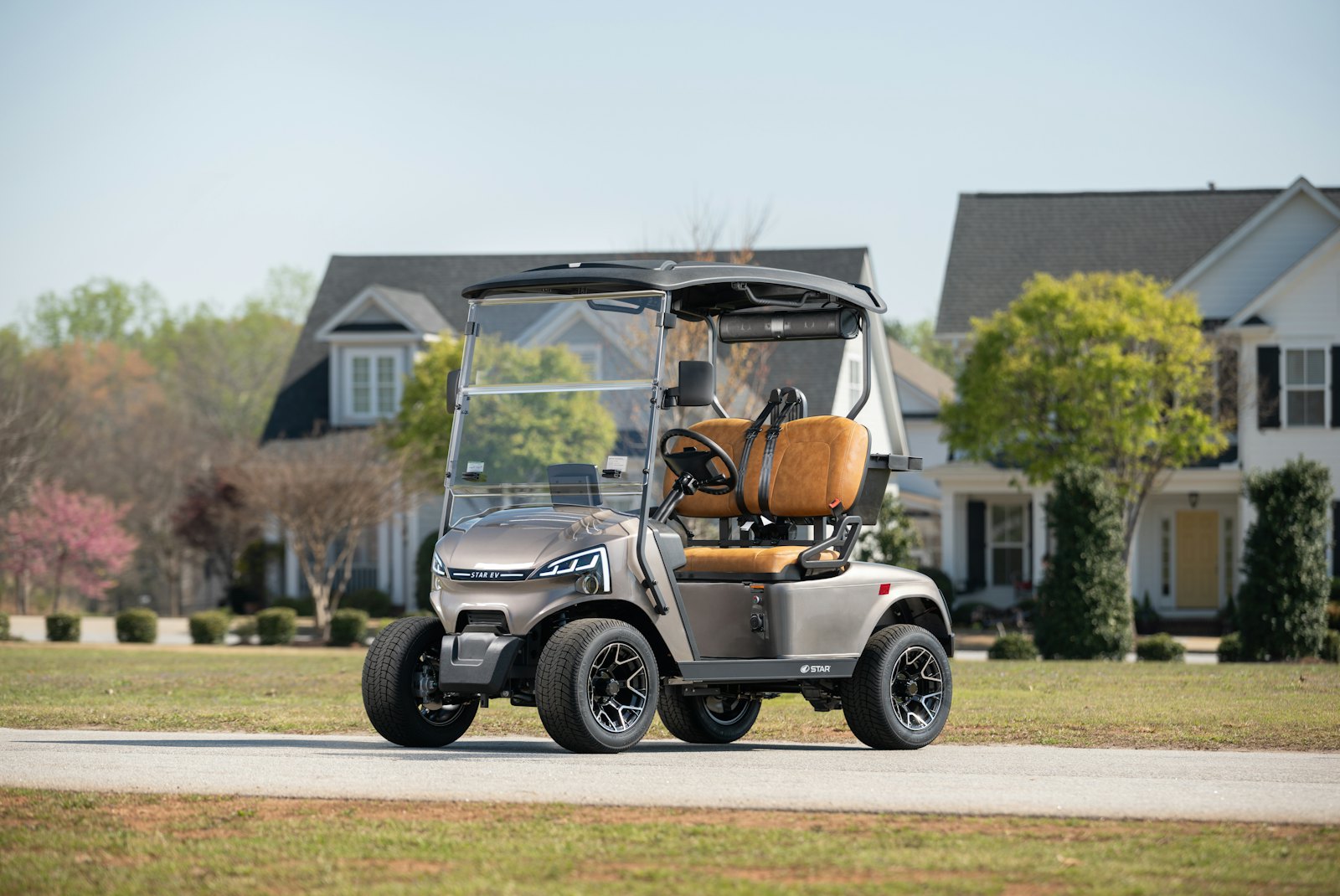
Club Car’s DS platform was produced from 1980 through 2014, but that does not mean every DS uses the same engine, electrical system, charger, body parts, or suspension components. The model name stayed familiar while the hardware changed across more than three decades.
1980–1989: the original DS era
Club Car identifies the 1980s as the decade when the DS became its flagship golf car. Early DS vehicles are mechanically simple by modern standards and should be treated as their own fitment group when sourcing steering, suspension, body, charging, or gas-powertrain parts.
1990s: major powertrain evolution
The 1990s brought important drivetrain updates. Club Car’s history notes the introduction of the FE290 overhead-valve engine in 1992. Electric DS carts from this period also used control and charging hardware that differs from later 48V generations, so a 1990s DS should not be assumed to share electrical parts with a 2000s cart.
2000s: mature gas and 48V electric DS carts
By the 2000s, the DS platform had a large installed base and multiple gas/electric configurations. Club Car manuals from this era separate gas and electric procedures, and parts catalogs often divide fitment by serial range or year. This is especially important for chargers, receptacles, controllers, motors, front suspension, and body components.
2010–2014: the final DS years
Club Car’s FAQ states that DS production ended in 2014. Late DS carts can look very similar to earlier versions, but age alone does not guarantee interchangeability. Verify the serial number before using a part advertised for “2000-up” or another broad range.
Gas DS vs electric DS
The first split to make is powertrain. Gas DS carts use engine, fuel, ignition, starter/generator, exhaust, and drive components. Electric DS carts use a traction motor, controller or resistor/control system depending on era, battery pack, charger receptacle, and charging system.
If charging fitment is the issue, see our Club Car charger plug and receptacle guide.
Serial number matters more than body style
Club Car says the serial prefix identifies the model while the next four digits identify model year and production week. That information is more reliable than body color, seat upholstery, wheels, roof, or lights because those items are frequently replaced.
Use our Club Car DS identification guide if you are not sure which DS you own.
Common DS fitment breakpoints
Parts sellers commonly separate DS accessories by early/late body generation, charger system, gas engine generation, or specific year ranges. Windshields, roof supports, front body pieces, seat components, light kits, chargers, steering parts, and suspension parts are the areas most likely to need an exact year check.
Do DS dimensions stay the same?
The basic two-passenger DS footprint stayed relatively compact, but overall height, weight, tire diameter, roof style, rear-seat conversions, lift kits, and battery configuration can change measured dimensions. Do not use a generic DS dimension to order a fitted cover or transport trailer without measuring the actual cart.
Buying a used DS by year
Year matters, but condition matters more. On an electric DS, battery age, charger compatibility, cable condition, and controller/motor health can outweigh a few years of age. On a gas DS, compression, starting, fuel system condition, oil leaks, and drivetrain noise are more important than cosmetics.
Bottom line
Think of the Club Car DS as a long-running platform with several mechanical and electrical generations. The safest workflow is: confirm the serial number, identify the year, separate gas from electric, then buy parts for that exact configuration instead of assuming all 1980–2014 DS carts interchange.
n
How to use year ranges in parts listings
When a part is advertised for a range such as “2000-up DS,” verify what changed at the lower breakpoint and whether the listing really extends through the 2014 end of DS production. Check mounting holes, connector style, body shape, and OEM replacement number. Broad marketplace titles can hide narrower fitment notes in the product description.
n
Practical rule: record the serial number before every major parts order.