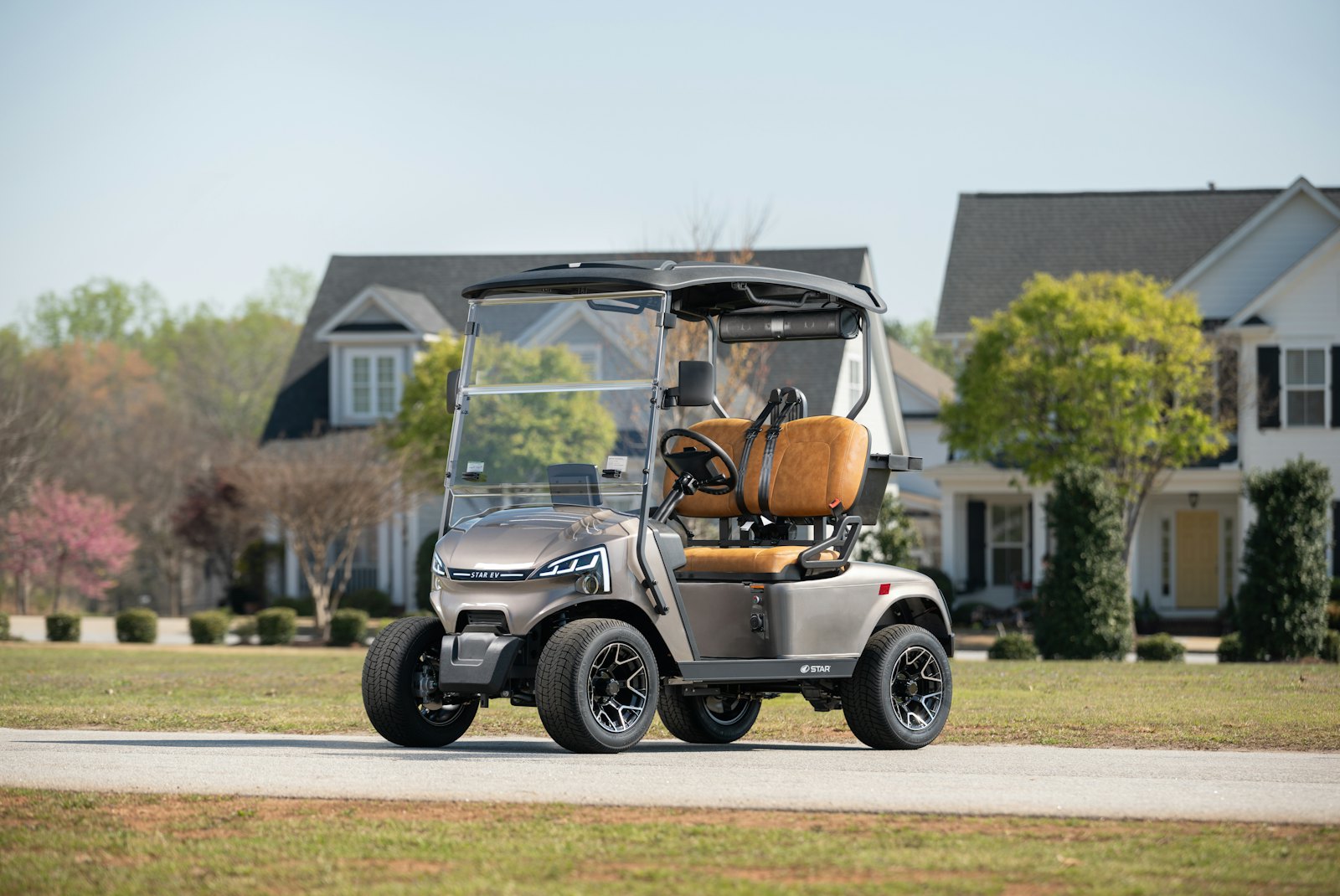
Short answer: the best 12V golf cart accessories are useful only when the cart has a stable, properly fused 12V accessory supply. On 36V, 48V, or higher-voltage electric carts, use a correctly sized voltage reducer or factory 12V accessory circuit instead of connecting 12V devices directly to the traction pack.
Once the power source is correct, practical 12V upgrades include USB charging, horns, lighting, fuse/distribution panels, fans, audio systems, and other low-voltage accessories.
Start with the power system
A 12V accessory expects approximately 12V input. A 48V traction battery does not become compatible just because the accessory has two wires. Use a DC-DC reducer sized for the combined accessory load and protect circuits with appropriate fuses.
Useful 12V accessories worth comparing
Affiliate disclosure: We may earn a commission from qualifying purchases. Confirm input voltage, current draw, fuse sizing, and mounting before installing electrical accessories.
48V/36V-to-12V DC-DC voltage reducer
A reducer is often the foundation for adding 12V equipment to a higher-voltage electric cart. Size it for the total continuous and peak current of the accessories you plan to run.

12V USB charging panel with voltmeter
A fused USB outlet gives passengers a practical charging point for phones and small electronics. Mount it where water cannot pool around the terminals.


12V golf cart horn kit
A horn is a common utility and street-use accessory. Confirm local requirements separately if the cart is used on public roads.

Fuse every added circuit
Install a fuse close to the power source or use a fused distribution block. The fuse protects wiring from overheating during a short circuit; it should be sized for the wire and accessory load rather than simply using the largest fuse that does not blow.
Avoid tapping one battery in a series pack
On multi-battery lead-acid carts, pulling 12V continuously from a single battery can unbalance the pack. A proper reducer draws from the full pack and supplies regulated 12V output, which is a cleaner solution for ongoing accessory power.
Popular 12V accessory categories
- USB/phone charging: useful for navigation and communication.
- Horn: improves warning capability.
- Lighting: headlights, rock lights, interior/dome lights, and accent lighting may use 12V.
- Fans: hardwired 12V fans avoid recharging portable batteries.
- Audio: many soundbars and amplifiers expect a 12V source.
- Switch panels: organize multiple accessories and reduce loose inline wiring.
How large should the reducer be?
Add the maximum current draw of the accessories that can operate at the same time, then leave reasonable headroom. A pair of USB ports and a horn require much less continuous power than a large soundbar, heater, or lighting system. Do not size a reducer from wattage guesses alone when current specifications are available.
Grounding and wiring
Use automotive-grade wire, protected terminals, and grommets where wiring passes through panels. Secure wires away from steering, suspension, hot engine parts, sharp edges, and tire contact. Label circuits so future troubleshooting is easier.
Street-use note
Installing 12V lights, mirrors, or a horn does not automatically make a golf cart street legal. Vehicle classification and equipment requirements vary by location. See our street-use accessories guide for the broader checklist.
Switch panels and accessory expansion
If you expect to add several accessories over time, plan a fused distribution point instead of stacking multiple ring terminals on the reducer output. A labeled switch/fuse panel makes troubleshooting easier and gives each branch circuit its own protection.
Do not run high-power heaters from a small accessory reducer
Fans, USB outlets, horns, and moderate lighting are typical 12V loads. High-power heaters and large amplifiers can draw far more current. Check wattage and current before assuming an existing reducer can support the new accessory, and upgrade the wiring/protection when necessary.
Plan for future service
Use connectors and fuse locations that remain accessible after the dash, seat, or body panels are reinstalled. Clean service access matters when a fuse blows or an accessory fails later, and it reduces the temptation to bypass protection just to restore power quickly.
Bottom line
Build the 12V power system first, then add accessories. A properly sized reducer, correct fusing, and clean wiring matter more than any individual gadget. Once the electrical foundation is correct, USB charging, horns, fans, lights, and audio can be added much more reliably.