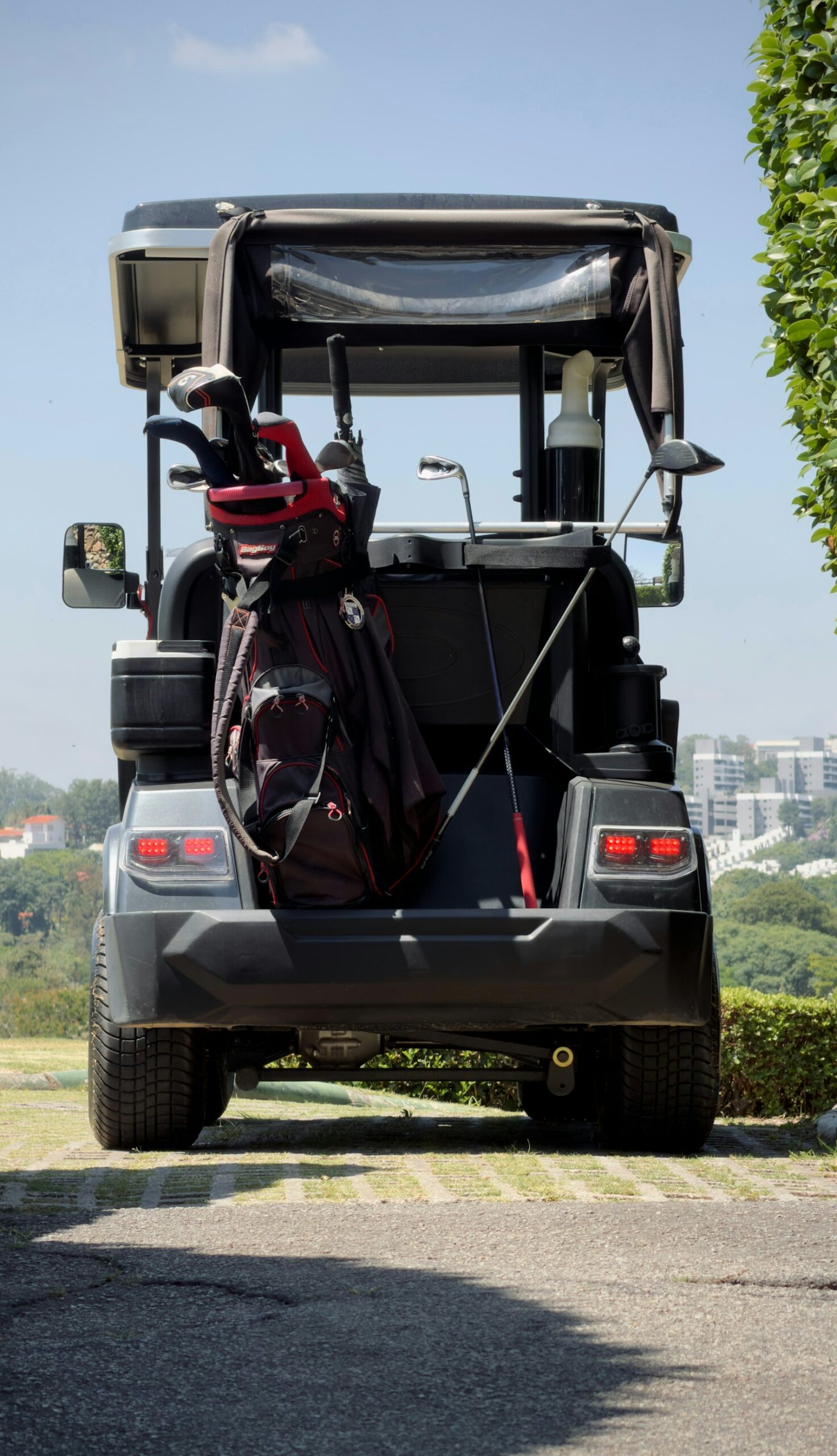
Short answer: A Club Car DS cover should be sized for the cart’s passenger layout and total roof/body length. A 2-passenger DS and a 2+2 cart with a rear seat do not use the same overall dimensions, so choose by actual size rather than the words “Club Car cover” alone.
This guide is for parked-cart storage covers. If you want a cover you can drive with, see our Club Car DS enclosure guide.
What to check before buying
- Passenger layout: 2-seat vs 2+2/rear-seat carts need different lengths.
- Roof length: extended roofs require more fabric and different strap placement.
- Material: heavier polyester/oxford fabric can handle outdoor exposure better, but ventilation still matters.
- Wind control: straps, buckles, and elastic hems reduce flapping.
- Rear accessories: golf-bag holders, rear seats, safety bars, and cargo boxes can change the fit.
Current cover options worth comparing
Affiliate disclosure: We may earn a commission from qualifying purchases. Measure the cart and verify roof/passenger configuration before buying.
10L0L multi-size golf cart cover
This type is marketed across several golf-cart brands and passenger sizes. It is useful if you measure carefully and choose the size that matches a DS with or without a rear seat.

NEVERLAND 4-passenger cover
This is a better direction for a DS converted to 2+2 seating. Confirm total cart length and whether the cover clears the rear grab bar or footrest.

10L0L 650D multi-passenger cover
A heavier-fabric option can make sense for outdoor storage, but fabric weight alone does not guarantee a good fit. Look at seam layout, vents, straps, and roof length too.

Storage cover vs driving enclosure
A storage cover protects a parked cart and normally blocks visibility and access. A driving enclosure has clear windows, doors, and openings designed for use while the cart is moving. Do not drive with a full storage cover installed.
Outdoor vs indoor storage
For indoor storage, dust protection and easy removal may matter most. For outdoor storage, prioritize water resistance, wind straps, ventilation, UV exposure, and secure coverage around the lower body.
How to measure your Club Car DS
- Measure total cart length including rear seat, footrest, or cargo box.
- Measure roof length rather than assuming it is stock.
- Check overall height if the cart is lifted.
- Note mirrors, brush guards, and other protruding accessories.
- Compare those measurements with the cover’s stated dimensions.
Preventing moisture under a cover
A waterproof outer layer can still trap condensation. Choose a cover with ventilation where possible and let a wet cart dry before leaving it covered for long periods. Avoid sealing moisture against seats and electrical components.
Wind damage prevention
Use every supplied belly strap or buckle. A loose cover can flap against the body, wear through fabric, and stress seams. In severe weather, move the cart to a more sheltered location if possible.
Frequently asked questions
Will a universal cover fit a Club Car DS?
It can, if the dimensions match. Measure the cart, especially after rear-seat, lift, or roof modifications.
Can I cover a wet golf cart?
Briefly, but long-term storage is better after the cart and cover have dried to reduce trapped moisture.
Does a 4-passenger cover fit a 2-seat DS?
It may be too long and loose. A properly sized cover usually handles wind better and creates less fabric movement.
Bottom line
For a Club Car DS storage cover, passenger layout and roof length are the first checks. Choose a secure, ventilated cover that matches your actual cart dimensions instead of relying only on a universal brand label.
Lifted carts and cover sizing
A suspension lift increases overall height and can change how a fitted cover reaches the lower body. Measure the actual cart after modifications instead of relying on stock dimensions. Larger tires, rear grab bars, and brush guards can also require extra room.
Long-term storage
For storage lasting weeks or months, clean the cart before covering it and periodically inspect underneath for moisture, pests, and corrosion. A cover protects from dust and weather, but it should not hide developing maintenance problems.