
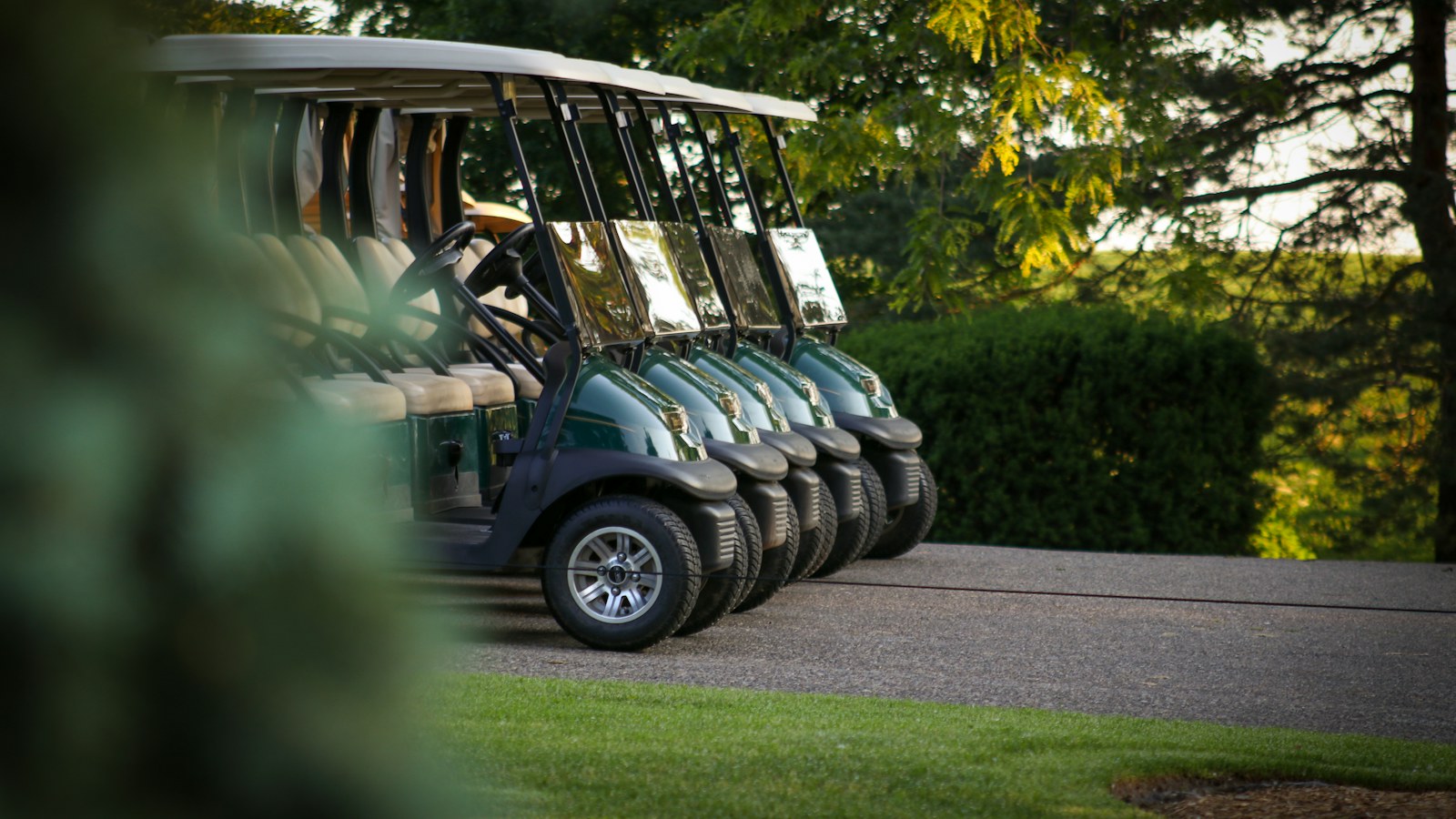
The best golf cart tire depends on where you drive, how much clearance the cart has, and whether the suspension is stock or lifted. Street, turf, and all-terrain tires use different tread patterns, and changing overall tire diameter can affect steering, ride height, gearing, and body clearance.
Start with fitment, not appearance. A tire that looks better in a product photo is not useful if it rubs the body, overloads the wheel, or requires a lift kit you did not plan to install.
Choose the tread for the surface
Street tires
Street-focused tires usually use a smoother tread with more continuous contact with pavement. They tend to roll quietly and can provide predictable handling on hard surfaces. If the cart will be used on public roads where allowed, also check local tire and equipment requirements.
Turf tires
Turf tires are designed to spread load and reduce damage on grass. They are a practical choice for golf courses, lawns, campuses, and properties where preserving the surface matters more than aggressive off-road grip.
All-terrain and trail tires
All-terrain tires use deeper tread blocks for gravel, loose soil, trails, and uneven ground. They can add road noise and rolling resistance, and larger sizes may need more clearance than a stock cart provides.
Understand golf cart tire sizing
A common size such as 18×8.5-8 describes the approximate overall tire diameter, tire width, and wheel diameter. Metric sizes use a different format. Do not compare only the wheel diameter because two tires for the same wheel can have very different overall heights.
- Overall diameter: affects body and suspension clearance.
- Tire width: affects side clearance and wheel fit.
- Wheel diameter: must match the tire bead size.
- Wheel offset: changes how far the wheel sits inward or outward.
Stock height vs lifted carts
Many stock-height carts can use common replacement sizes without modification, but oversized tires may rub during full steering lock or suspension compression. A lift kit can create more clearance, but it also changes suspension geometry and center of gravity.
Do not assume a specific tire size fits every Club Car, E-Z-GO, Yamaha, or Evolution model. Body shape, wheel offset, suspension condition, and existing modifications all matter.
Load rating, pressure, and ride quality
Use tires with a load rating appropriate for the cart, passengers, and cargo. A 4- or 6-passenger cart can place more demand on the tires than a 2-passenger cart. Inflate to the tire or vehicle specification rather than guessing from appearance.
Too little pressure increases rolling resistance and heat. Too much pressure can reduce ride comfort and change the contact patch. Check pressure when the tires are cold and use the same gauge consistently.
Tire products worth comparing
Affiliate disclosure: We may earn a commission from qualifying purchases.


The pressure gauge and portable inflator are useful for routine tire care. The larger all-terrain wheel-and-tire set is a fitment-specific example, so verify cart clearance and lift requirements before considering it.
Fitment checklist before ordering tires
- Read the current tire size from the sidewall.
- Measure available height and width around the tire.
- Check clearance at full left and right steering lock.
- Confirm wheel diameter, bolt pattern, and offset if replacing wheels too.
- Check whether the cart is stock height or lifted.
- Consider passenger and cargo load.
- Verify the intended surface: pavement, turf, gravel, or trail.
Frequently asked questions
Do bigger golf cart tires make the cart faster?
A taller tire travels farther per wheel rotation, so it can change effective gearing and may slightly change top speed. It can also reduce low-speed torque and increase load on the drivetrain, so larger tires are not a guaranteed performance upgrade.
Do I need a lift kit for all-terrain tires?
Not always. Smaller all-terrain tires may fit some stock carts. Larger diameters commonly need additional clearance. Check the exact model, tire diameter, wheel offset, and suspension condition.
Should golf cart tires be balanced?
Balancing can help if the cart is driven at higher speeds or develops vibration. Low-speed utility carts may be less sensitive, but a persistent shake should still be checked for wheel, tire, bearing, or alignment problems.

