
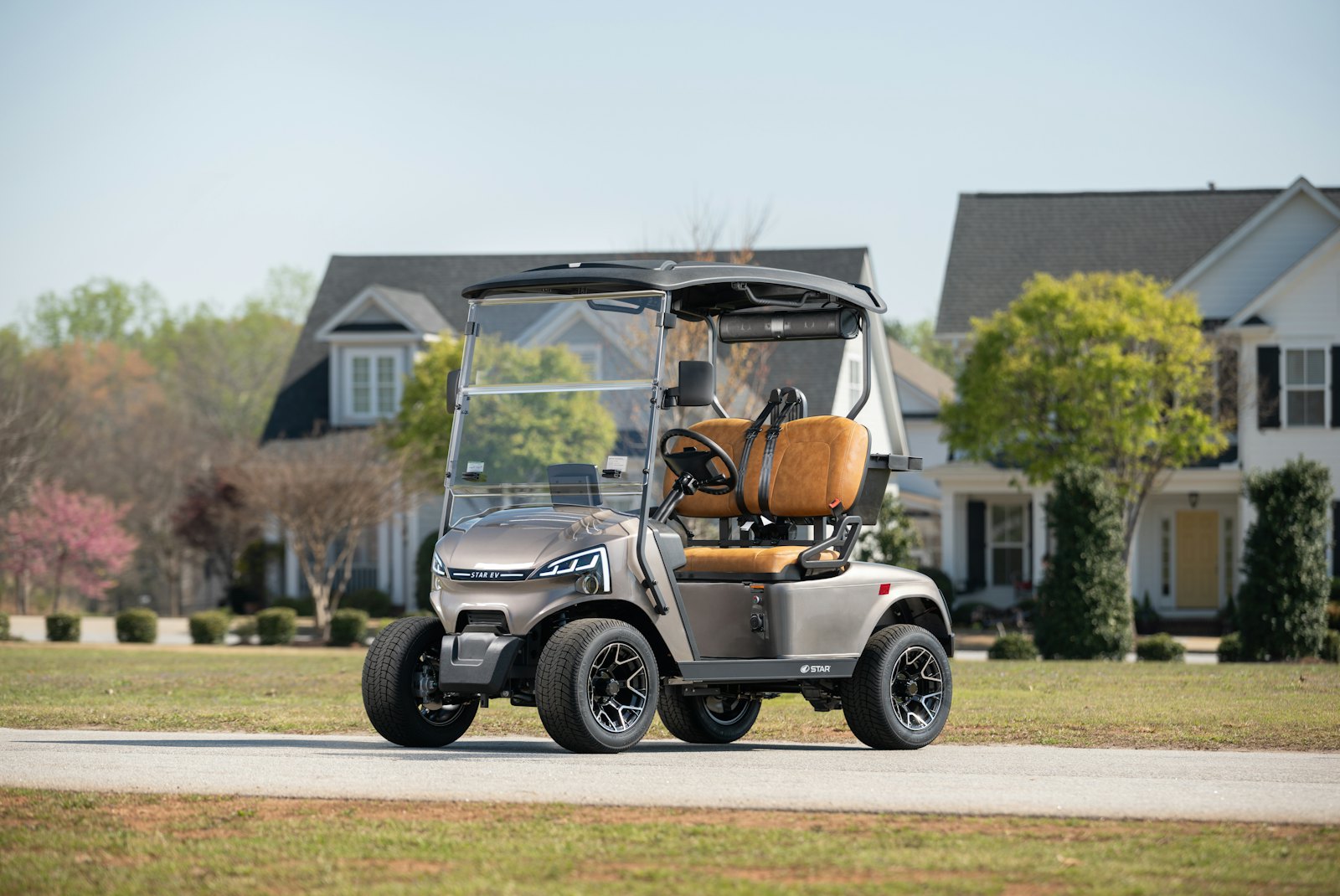
Used EZGO TXT values vary more by battery condition, powertrain, seating, and upgrades than by model year alone. As an October 2026 market snapshot, older TXT carts commonly appear from roughly the high-$2,000s into the $5,000 range, while cleaner 2014–2015 carts with fresh batteries, rear seats, lifts, or dealer refurbishment can move well beyond that.
This guide is a valuation framework, not a fixed price book. Golf cart pricing is highly local, and dealer-refurbished carts should not be compared directly with private-party stock carts.
Current market examples
Recent public listings show how wide the range can be:
- 2005 TXT: examples around $2,995, $3,500, $4,800, and $4,995 depending on gas/electric setup, battery condition, rear seat, wheels, lights, and dealer preparation.
- 2012 TXT: current examples around $3,000 for a basic 36V cart and about $5,000 for a lifted four-passenger configuration; another 48V cart needing batteries was listed around $4,250.
- 2014 TXT: a used 48V four-passenger example with replaced batteries was listed around $3,800, while a heavily refurbished dealer cart was listed around $7,750.
- 2015 TXT: current used examples range around $5,450 to $6,999 depending on batteries and upgrades, with full dealer rebuilds approaching $9,650.
Practical value bands by age
For a normal running TXT in usable condition, these broad bands are more useful than pretending every year has one exact number:
- Late-1990s to mid-2000s: often roughly $2,500–$5,000.
- Late-2000s to early-2010s: often roughly $3,000–$5,500.
- 2014–2015-era carts: often roughly $3,800–$7,000 as used carts, with professionally refurbished examples higher.
These are current asking-price observations, not guaranteed sale values. Condition can move a cart outside the band quickly.
Battery condition can change value by thousands
On an electric TXT, battery age is often the single most important pricing variable. A cart with a tired lead-acid pack may need an expensive replacement shortly after purchase. A cart with documented newer batteries or a properly installed lithium conversion can justify a premium, but only after confirming the charger, battery-management system, wiring, state-of-charge display, and installation quality.
Never accept “new batteries” without checking date codes, brand, chemistry, and charging behavior.
36V vs 48V matters
TXT carts exist in different electrical configurations across generations. A 48V setup may be more desirable for some buyers, but voltage alone does not establish value. Controller condition, motor, charger, battery health, wiring, and how the cart performs under load matter more than the badge on the charging port.
Rear seats, lifts and street equipment
Useful upgrades can add value, but usually not dollar-for-dollar compared with what the previous owner spent. A professionally installed rear flip seat, quality lift, fresh tires, lights, windshield, mirrors, and clean upholstery can make a cart easier to sell. Poorly installed electrical accessories, oversized tires with rubbing, weak springs under a rear seat, or questionable “street legal” modifications can reduce value.
Gas TXT value factors
For gas carts, battery-pack replacement is not the issue, but engine condition is. Check cold starting, idle, smoke, oil leaks, fuel-system condition, starter-generator operation, belts, exhaust, and compression symptoms. A cosmetically attractive gas TXT with an unhealthy engine is not a bargain.
What to inspect before paying
- Serial/model information and claimed year
- Gas vs electric configuration
- Battery date codes or engine condition
- Charger operation on electric carts
- Frame corrosion and battery tray condition
- Steering play and front-end wear
- Brake operation
- Tire age and uneven wear
- Rear-seat frame and suspension condition
- Lift-kit alignment and tire clearance
- Lights, horn, mirrors, USB, audio and other added wiring
Modified vs refurbished
A modified cart is not automatically refurbished. A true dealer rebuild may include new batteries, cables, brakes, suspension parts, tires, body panels, upholstery, and a warranty. A private-party cart with a lift, wheels, and stereo may still have old batteries and worn steering underneath.
Where the TXT still makes sense
The TXT remains attractive because parts availability and aftermarket support are broad. If you are planning upgrades, our EZGO TXT accessories guide and TXT tire-size and lift fitment guide show what to inspect before buying a cart that is already modified.
Bottom line
Year is only the starting point for EZGO TXT value. In 2026, a clean older TXT can still command several thousand dollars, while recent-battery, four-passenger, lifted, or professionally rebuilt carts can sell much higher. Price the cart from its battery or engine condition, chassis, suspension, brakes, and quality of upgrades first, then use model year as a secondary adjustment.


