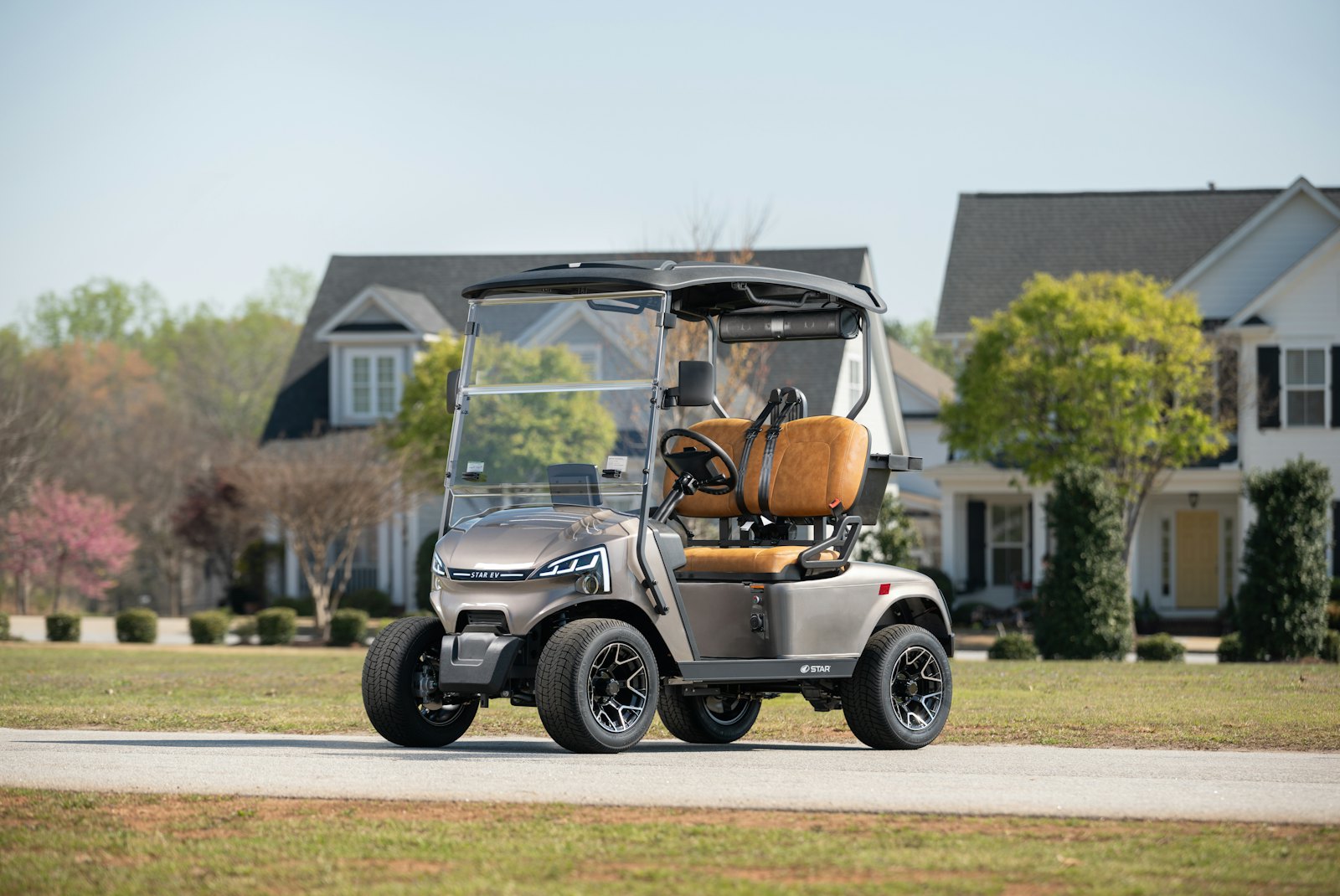
The E-Z-GO TXT and RXV are not two versions of the same chassis. The TXT is the older, simpler platform with an enormous aftermarket, while the RXV is a newer design with different suspension, steering, braking, body mounting points, and electrical systems. That difference matters most when you buy seats, windshields, lift kits, light kits, body parts, or suspension components.
TXT vs RXV at a glance
| Area | EZGO TXT | EZGO RXV |
|---|---|---|
| Platform age | Long-running legacy platform with very broad aftermarket support | Newer platform introduced for the 2008 model year |
| Front suspension | Traditional leaf-spring-based layout on many generations | Independent A-arm front suspension |
| Electric power | Varies widely by year: 36V and 48V systems are common | Current versions include 48V AC and ELiTE lithium configurations |
| Braking | Conventional mechanical service/parking-brake layouts vary by generation | RXV ELiTE uses E-Z-GO’s IntelliBrake/electromagnetic parking-brake architecture |
| Accessory fitment | TXT-specific brackets, body panels, seats, windshields and lifts | RXV-specific mounting points and hardware |
The biggest difference is the chassis and suspension
An RXV-specific part should not be assumed to fit a TXT simply because both carts carry the E-Z-GO badge. Current RXV specifications use an independent A-arm front suspension with coil-over shocks and a mono-leaf rear spring. That front-end layout changes how lift kits, steering parts, shocks, wheel clearance and alignment are handled.
TXT generations use a different front structure and have their own lift-kit families. This is why an accessory listing that says “EZGO” is not specific enough for suspension, steering, windshield or body parts. Match the exact model and year range.
Electric systems vary more on the TXT
The TXT has been produced across enough years that you will encounter both 36-volt and 48-volt electric carts, plus different controllers, chargers and connectors. Before ordering electrical parts, identify the pack voltage and cart generation instead of relying on the body shape.
The current RXV lineup is easier to separate by powertrain. E-Z-GO lists 48V AC lead-acid and ELiTE lithium versions, with current ELiTE models using a single lithium pack. That does not make RXV electrical accessories universal; charger, controller and harness compatibility still depend on the exact configuration.
Brakes are another reason parts do not interchange
On an older TXT, brake service usually centers on the mechanical brake system, cables, pedals and rear brake components for that generation. RXV electric models introduced a different control philosophy, and current ELiTE specifications include an automatic electromagnetic parking brake. A brake problem that sounds similar can therefore have a completely different diagnostic path.
Seats, windshields and body accessories are model-specific
Rear-seat kits, front seats, windshields, roof supports and body panels are among the most commonly mis-ordered parts. Start with the dedicated EZGO TXT accessories guide or EZGO RXV accessories guide instead of shopping by brand alone.
The same rule applies to wheels and tires. The common golf-cart bolt pattern may allow a wheel to bolt on, but tire diameter, offset and suspension clearance still decide whether it actually fits. For the older platform, see the TXT tire-size and lift fitment guide.
Which one is easier to modify?
The TXT usually wins for sheer aftermarket breadth. Its long production history means there are many choices for body kits, seats, lift kits, storage, lighting and replacement parts. The RXV also has a strong aftermarket, but its suspension and electrical architecture reward more careful model-specific shopping.
If your goal is a simple project cart with readily available replacement parts, a well-kept TXT can make sense. If you value a more modern driving feel, current powertrain options and newer chassis design, an RXV may be the better starting point.
Used-cart checklist before you buy parts
- Confirm TXT vs RXV from the cart identification information, not appearance alone.
- Record the model year or date code.
- For electric carts, confirm battery-pack voltage and chemistry.
- Inspect any existing lift kit before ordering wheels, tires or suspension parts.
- Check whether a rear seat, long roof or aftermarket body has changed normal fitment.
- Match windshields, seats and light kits to the exact roof-support and body generation.
Bottom line
TXT and RXV parts should be treated as separate fitment families. The TXT is the older, modification-friendly platform; the RXV uses a newer chassis, independent front suspension and different electric/braking architecture. Identify the cart first, then buy the part.
Reference: Current RXV specifications are available from E-Z-GO.
n
Related: EZGO TXT models and years.