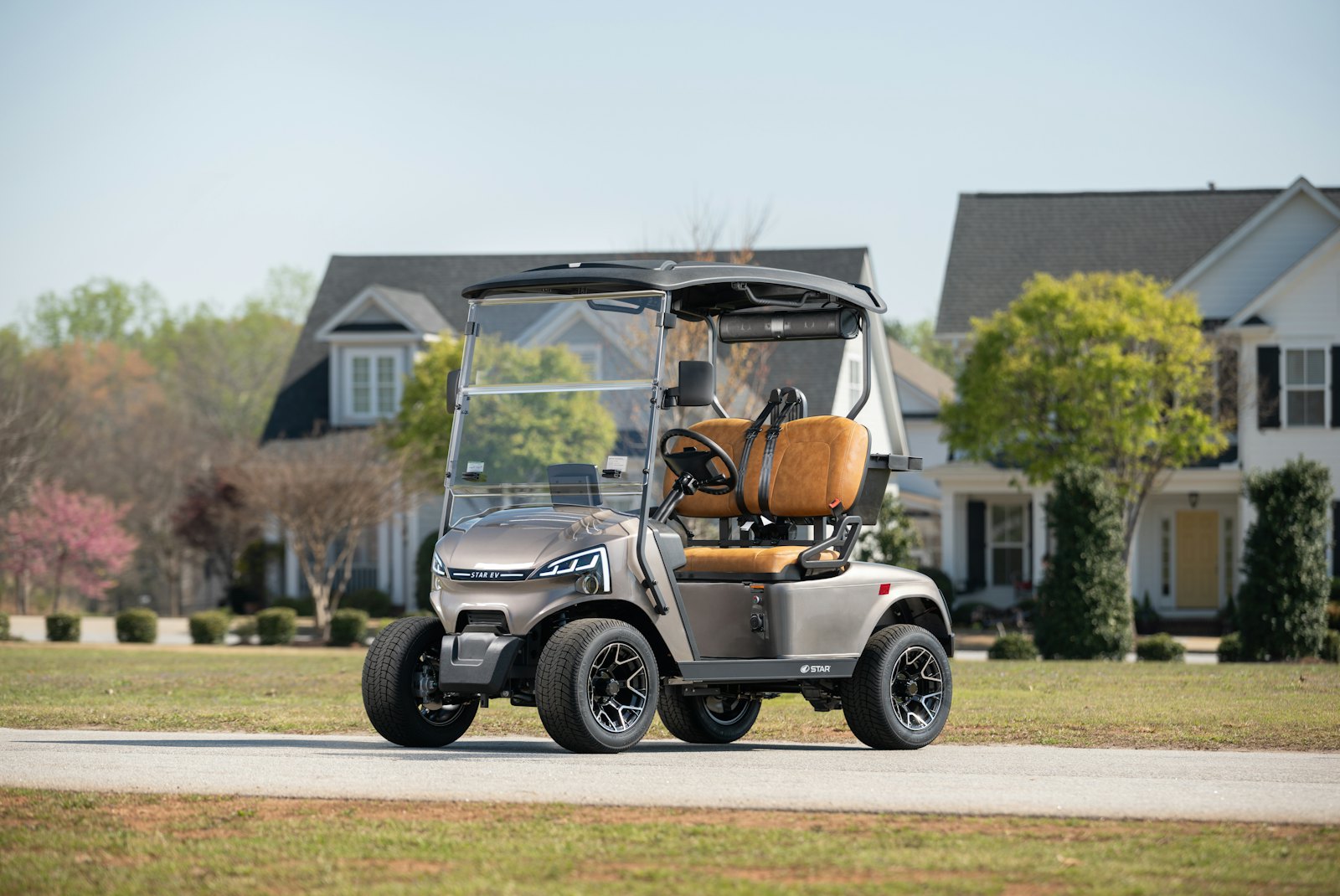
Short answer: golf cart replacement parts are safest to buy by brand, model, year, powertrain, voltage, and original part number. Parts that look nearly identical can use different connectors, mounting points, thread directions, electrical ratings, or dimensions.
This guide explains the common categories that wear out and what to verify before ordering. For brand-specific parts, use model-focused guides whenever possible.
Common golf cart parts that need replacement
- Electrical: solenoids, contactors, key switches, controllers, chargers, voltage reducers, and wiring components.
- Steering: tie-rod ends, ball joints, bushings, kingpins, steering racks, and wheel bearings.
- Brakes: shoes, springs, cables, drums, pads, and hydraulic components on models that use them.
- Suspension: leaf springs, shocks, bushings, shackles, and lift-kit hardware.
- Body/interior: seat hinges, cushions, windshield clips, trim, latches, and roof hardware.
Three representative replacement parts
Affiliate disclosure: We may earn a commission from qualifying purchases. The examples below are model-specific and are not universal golf cart parts.
48V Club Car DS/Precedent solenoid
A solenoid is a high-current switching component. This example is for specific 48V Club Car applications, which is why voltage and model fitment must be confirmed before ordering.

Club Car Precedent/Tempo tie-rod end kit
Steering parts can differ by model and thread orientation. This example targets specific Precedent and Tempo applications rather than every Club Car.

Brake-shoe set for selected Club Car, EZGO and Yamaha models
Brake shoes are a good example of a part that may cross several model families while still having strict year limits. Compare the listed OEM numbers and dimensions with the old parts.

Use the serial number and original part number
Manufacturers often make running changes within a model family. Record the cart’s serial/PIN, model number, manufacture date, system voltage, and gas/electric configuration before shopping. E-Z-GO’s current owner documentation explicitly notes that identification numbers are required when ordering parts because design changes occur over time.
Electrical parts need more than a visual match
For solenoids, controllers, chargers, motors, reducers, and switches, compare operating voltage, current rating, connector layout, coil voltage, polarity, and OEM cross-reference numbers. Installing a part that merely “looks right” can cause failure or wiring damage.
Steering and suspension parts
Check thread direction, stud taper, mounting-hole spacing, bushing diameter, spring length, and model-year range. After replacing steering or suspension components, inspect alignment and fastener torque before normal use.
Brake parts
Brake-shoe and cable listings often span several models but not every year. Compare drum diameter, shoe shape, cable length, end fittings, and OEM number. Any uncertainty in braking parts deserves confirmation from a service manual or qualified technician.
Body and interior parts
Seat hinges, cushions, windshield clips, dash pieces, and roof hardware are lower-risk purchases, but generation changes still matter. A cushion or windshield bracket can be the right width yet use different mounting points.
OEM vs aftermarket
OEM parts give the clearest factory fitment path. Aftermarket parts can offer lower cost or upgraded materials, but quality and fitment claims vary more. For safety-critical steering, braking, and high-current electrical work, fitment documentation matters more than the lowest price.
Start with a model-specific guide when one exists
Generic parts searches are useful for learning the category, but model-specific sourcing is safer. We maintain dedicated guides for platforms such as Yamaha golf cart parts by model and EZGO Medalist parts. Use the general guide to understand what the part does, then use the model guide to confirm fitment.
Keep the old part until the repair is finished
Do not discard the failed component before the replacement is installed and tested. The old piece provides dimensions, connector layout, stamped numbers, thread direction, bracket shape, and hardware references that can resolve a fitment question faster than a listing title.
Photograph connectors and hardware before disassembly
Before removing an electrical or mechanical part, take clear photos of connectors, wire colors, bracket orientation, spacers, washers, and fasteners. Those photos make reassembly easier and help verify whether a replacement part actually matches the original configuration.
Bottom line
Start every golf cart parts purchase with the exact cart identity and the failed component’s original number. Treat “universal” as a claim to verify, not a guarantee. Correct voltage, dimensions, mounting, connectors, and model-year fitment are what turn a replacement part into the right part.