
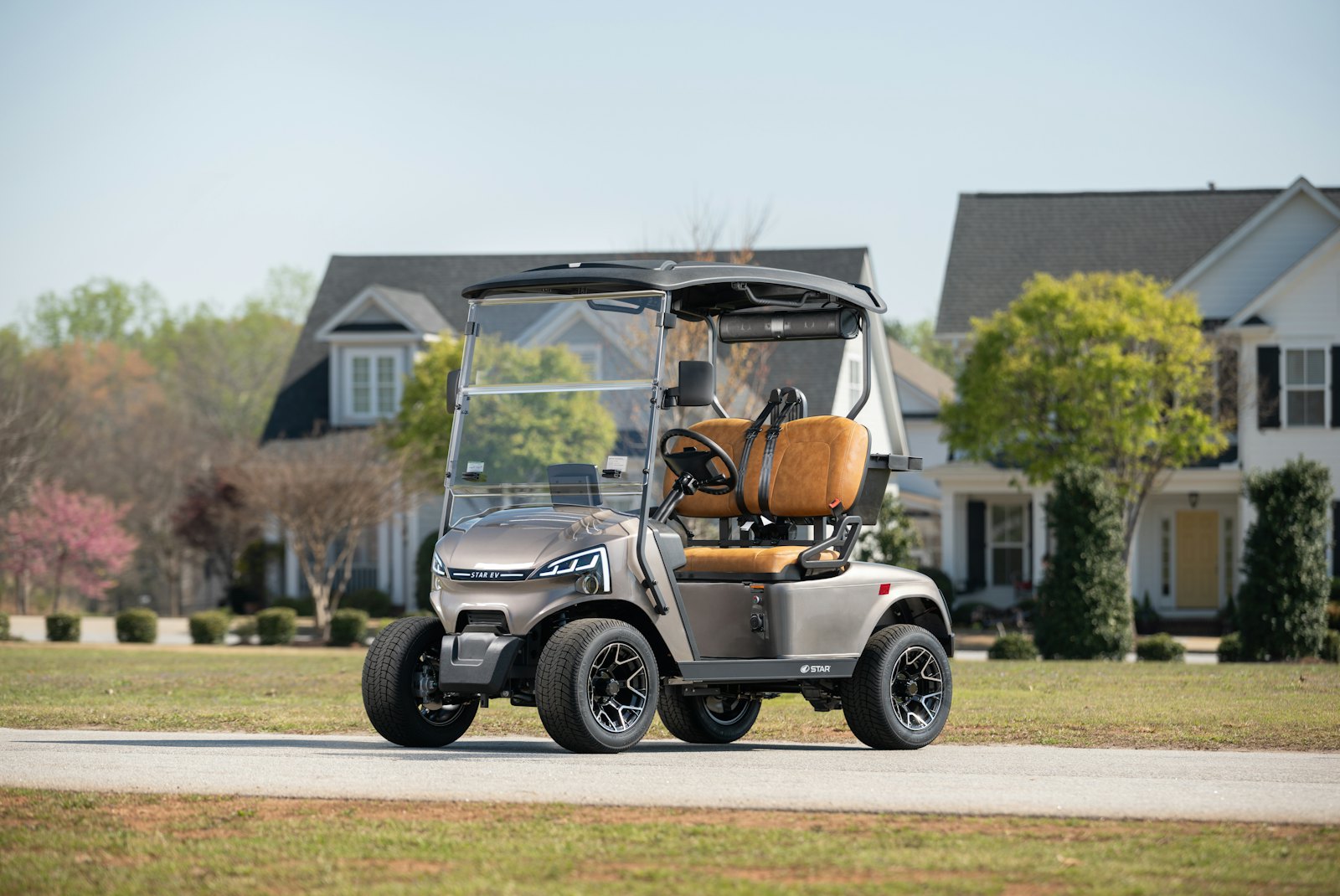
Short answer: the most useful golf cart rear-seat accessories are grab bars, armrests/cup holders, cargo storage, footrest upgrades, and visibility/safety items. But every accessory should be chosen around the actual rear-seat frame, passenger layout, roof supports, suspension capacity and foot platform.
A rear flip seat changes the cart’s weight distribution and creates new passenger and cargo use cases. If you are still choosing the seat itself, start with our rear seat kit guide.
Rear-seat upgrades worth considering
- Grab bar: gives rear-facing passengers a stable handhold.
- Armrests and cup holders: add comfort but must clear the flip-seat mechanism.
- Cargo bag or net: useful when the rear seat is occupied and cargo still needs a place.
- Bag holder: useful for golf bags when the flip deck is not being used as cargo platform.
- Reflector/visibility accessories: important because the rear seat extends passengers toward the back of the cart.
Current rear-seat accessories worth comparing
Affiliate disclosure: We may earn a commission from qualifying purchases. Confirm the rear-seat frame dimensions and footplate before buying universal accessories.
Universal rear-seat safety grab bar
This type of grab bar mounts around the rear footplate/frame area on many 2+2 carts. Check height, frame spacing and whether a hitch or step accessory already occupies the mounting points.

Rear armrest with cup holder
An armrest can improve passenger comfort, but the clamp must match the square or round tubing on your rear-seat frame and stay clear when the seat flips.


Rear cargo storage bag
A soft cargo bag adds grocery or picnic storage without permanently changing the frame. Confirm it does not block taillights, reflectors or the flip-seat latch.

Grab bars are not seat belts
A handhold helps passengers stabilize themselves, but it is not a restraint system. If the cart is used where seat belts are required or appropriate, the belt anchor points need to be structurally sound and installed according to the seat/frame design.
Check the rear suspension after adding seats
Rear passengers, a steel seat frame, cargo and accessories add substantial load behind the axle. Inspect leaf springs, bushings, shocks, tires and tire clearance. A cart that sits level with two front passengers may sag or rub when four people and cargo are added.
Footrest and step clearance
The foot platform takes abuse from shoes, curbs and cargo. Check that added grab bars or hitches do not create sharp edges or reduce usable foot space. If the cart is lifted, rear passengers may also benefit from a secure step solution, but ground clearance and departure angle still matter.
Cargo use vs passenger use
Flip seats are attractive because the rear cushion can convert into a cargo deck. Before loading coolers or equipment, check the seat manufacturer’s load guidance and secure cargo so it cannot slide into passengers or fall into the road. Do not treat a seat deck as an unlimited utility bed.
Lighting and rear visibility
Make sure bags, golf clubs and accessories do not cover taillights, brake lights or reflectors. On long 4- or 6-passenger carts, mirrors become even more important because the rear structure increases the blind area behind the driver.
Fitment checklist
- Measure rear-seat frame tube size and spacing.
- Check the footplate and existing hitch/grab-bar mounts.
- Confirm the seat still flips fully after accessories are installed.
- Keep taillights and reflectors visible.
- Recheck suspension height and tire clearance under passenger load.
Recheck hardware after the first loaded rides
Rear-seat frames and add-on accessories settle after installation. After several rides with passengers, inspect grab-bar clamps, armrest hardware, footplate fasteners and roof supports for movement. Listen for new rattles and look for witness marks where brackets may be contacting the body. If the cart develops extra rear sag, steering lightness or tire rubbing, reduce the load and inspect the suspension before continuing to use the rear seat at full capacity.
Bottom line
Rear-seat accessories should make the cart safer and easier to use, not simply add more hardware. Start with a stable grab bar, choose armrests and cargo storage that match the actual frame, and keep suspension load, lighting visibility and flip-seat movement in the decision.
Related guides: 4-passenger cart accessories
Related: seat accessories worth adding.
