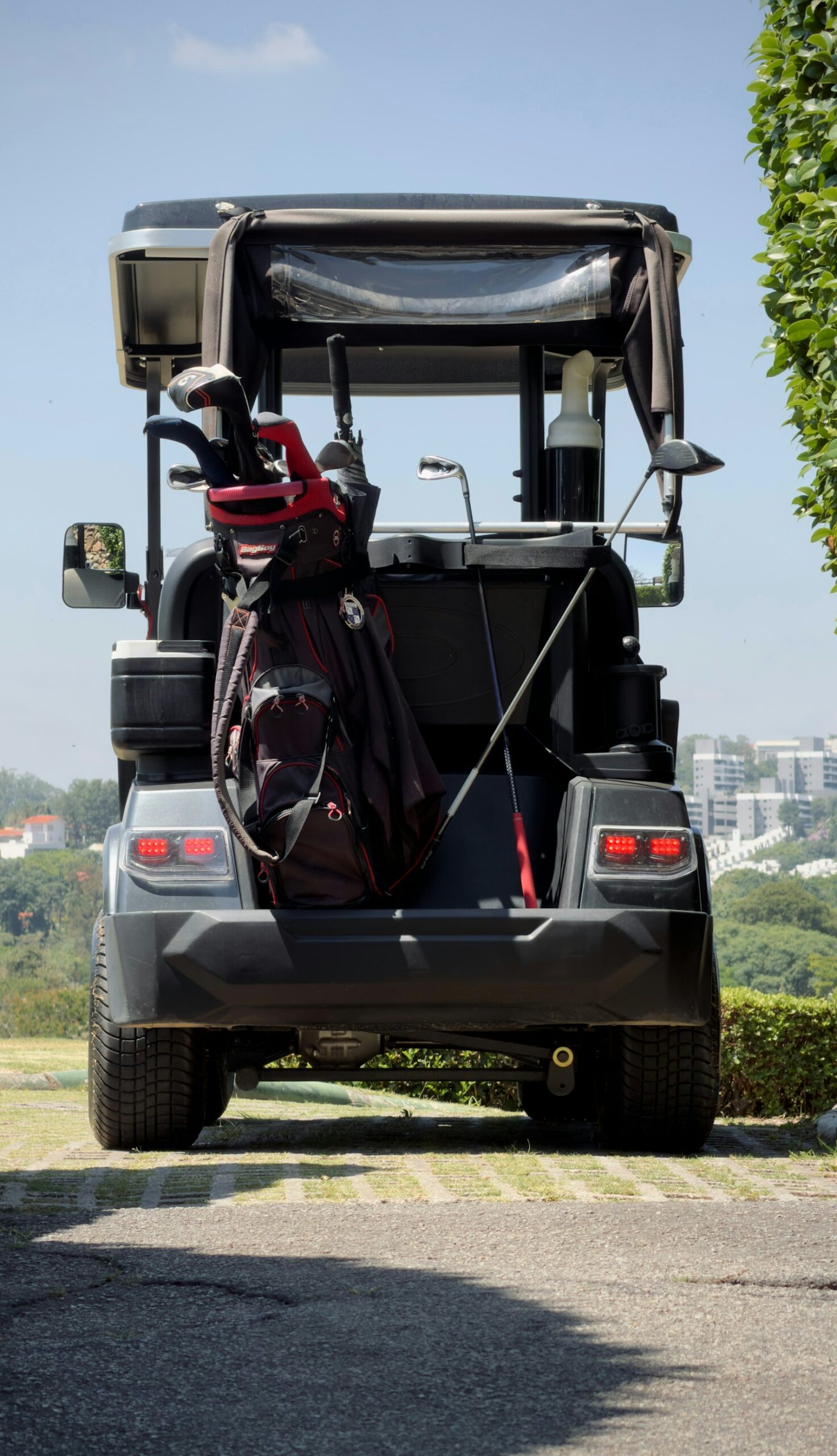
The right golf cart cover size is based on the cart’s actual overall length, width and height, not just the brand name. Passenger count is a useful starting point, but a lifted suspension, rear seat, extended roof, mirrors, brush guard, windshield, cargo rack or oversized tires can move the cart into a larger cover class.
For a general overview of materials and storage use, see our golf cart covers buying guide.
Start with the cart’s full outside dimensions
Measure the cart in the configuration you will actually cover. Do not measure only the body shell. Include the front bumper or brush guard, rear seat or cargo box, roof overhang and the highest accessory that will remain installed.
Record three measurements:
- Length: farthest front point to farthest rear point.
- Width: widest fixed point, including mirrors if they do not fold.
- Height: ground to the highest fixed point, usually the roof.
2-passenger covers
A standard two-seat golf cart is usually the shortest cover category. These covers are designed around carts without a rear flip seat or long cargo extension. A stock Club Car Precedent, EZGO TXT/RXV or Yamaha Drive2 can often fit a two-passenger cover if the product specifically lists the vehicle dimensions.
Do not assume every two-passenger cart is the same size. A lifted two-seat cart with 23-inch tires or a long roof may need more height and length than a stock model. Our 2-passenger cover guide focuses on that layout.
4-passenger covers
Most four-passenger cover listings are intended for a conventional 2+2 cart with a rear-facing seat. The rear seat and footrest add substantial length. Some products are long enough for a grab bar or folded rear footrest, while others are not.
Measure the cart with the rear seat in its normal parked position. If the rear seat flips into a cargo deck, the overall length may change slightly depending on the design.
See our 4-passenger golf cart cover guide for layout-specific choices.
6-passenger covers
Six-passenger carts vary more because they can use stretched frames, multiple forward-facing rows or rear-facing seat combinations. A “6 passenger” label is not enough. Compare the cover’s published maximum length with your actual cart.
If the cover is too short, it can pull tightly across corners, expose the lower body and put extra load on seams. A slightly generous cover with good straps usually works better than one stretched to its limit. Our 6-passenger cover guide covers the longer layouts.
Measure a lifted golf cart separately
Lift kits change more than ride height. Taller tires and lifted suspension can add several inches to overall height, and wide wheels or offset can increase the effective width. A cover sized tightly for a stock cart may not reach the lower body on a lifted model.
Measure after the lift and wheel/tire package are installed. Do not estimate the new height from lift-kit size alone because tire diameter also contributes.
Extended roofs change cover fit
Long roofs used on four- or six-passenger carts can extend well behind the rear seat. The cover has to fit the roof profile without pulling hard over the rear edge. A storage cover designed around a short two-seat roof may technically cover the body but leave the rear roof exposed or create excessive tension.
Mirrors and windshield clearance
Fold mirrors inward if the manufacturer allows it before covering the cart. Fixed mirrors can create pressure points that wear through fabric. If the windshield folds down, decide whether you will store it up or folded because that can change the cover’s contact points.
Sharp windshield edges, light bars and roof brackets should not bear directly against tightly stretched fabric.
How much extra room should a cover have?
A fitted storage cover should have enough extra room to slide over the cart without forcing seams, but not so much loose fabric that wind repeatedly whips it against the paint. The cover’s elastic hem, buckles or underbody straps should do the final tensioning.
If your measurement is exactly at the manufacturer’s stated maximum, the next size up may be the safer choice when the cart has protruding accessories. Confirm the seller’s sizing method because some dimensions describe the cover itself while others describe the maximum vehicle size.
Outdoor vs indoor sizing
Outdoor covers need secure straps and enough shape to shed water without excessive flapping. Indoor covers can be lighter and slightly looser because wind is not a concern. Compare our outdoor storage cover guide and indoor storage cover guide before choosing material.
Common cover-sizing mistakes
- Buying by brand only.
- Ignoring a rear seat or extended roof.
- Using stock dimensions after installing a lift.
- Forgetting fixed mirrors or a brush guard.
- Assuming all four-passenger carts use the same body length.
- Stretching a cover to its published maximum instead of allowing practical room.
Simple measuring checklist
Park the cart on level ground, remove loose cargo, place seats and windshield in the position you plan to store them, fold mirrors if appropriate, then measure length, width and height. Compare all three numbers with the cover’s fit range. If one measurement exceeds the range, move to a larger or more model-specific cover.
Bottom line
Choose a golf cart cover by measured dimensions first and passenger count second. Stock 2-, 4- and 6-passenger labels are useful categories, but lifted suspension, roofs, mirrors, rear seats and accessories can change the required size. A cover that fits with modest slack and uses straps or an elastic hem will protect the cart better than one stretched tight over the body.