

A golf cart radio and speaker combo is a good choice when you want a permanent audio system with one control point instead of a removable portable speaker. The important decisions are not just speaker size and Bluetooth. You also need to match the receiver, speaker load, weather exposure, mounting space, antenna, and 12V power supply to the cart.
What counts as a radio and speaker combo?
A true combo normally includes a head unit or gauge-style receiver plus matched speakers. Some packages add an antenna or wiring. A soundbar is different because it combines the amplifier and speakers into one enclosure and usually skips a traditional radio chassis.
Current combo styles worth comparing
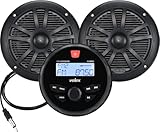
Gauge-style marine package: a compact round receiver is easier to place in a dash panel and is usually paired with weather-resistant speakers.

Conventional marine receiver plus speakers: this format feels more like a small automotive stereo and gives you a separate receiver and full-size speakers, but it needs more cutout and wiring space.
Overhead console approach: a console can solve the mounting problem on some carts, but the console itself is not the complete audio system. Confirm roof support spacing, receiver size, speaker clearance, and windshield movement.

Affiliate disclosure: We may earn a commission from qualifying purchases.
Start with the cart’s power system
Most aftermarket radios expect about 12V DC. A 36V or 48V electric golf cart should not power a 12V stereo directly from the full traction pack. Use a correctly sized DC-DC reducer and a fused accessory circuit. On a gas cart, confirm the accessory electrical system can support the receiver and amplifier load.
Speaker impedance and amplifier load matter
Do not choose speakers only by diameter. The receiver or amplifier must support the speaker impedance and number of channels. An unsupported load can overheat the amplifier or cause protection shutdowns. A matched package reduces guesswork, but you should still follow its wiring diagram.
Where should the speakers go?
Common locations include under-dash pods, overhead consoles, roof-support mounts, and rear-facing pods. Under-dash installations shorten wiring but can reduce legroom. Roof locations distribute sound well but must clear mirrors and enclosures. Rear mounts need protection from passengers and cargo.
Weather resistance is only part of durability
Marine-rated electronics help on an open cart, but water can still enter through unsealed wire splices, USB covers, upward-facing connectors, or poor dash openings. Use protected connections, sensible drip loops, and mounting locations outside direct roof runoff.
Radio combo vs Bluetooth soundbar
Choose a radio-and-speaker combo when you want a dedicated receiver, physical controls, AM/FM, or an integrated dash. Choose a Bluetooth soundbar when you want fewer cutouts and simpler installation. Neither format is automatically better.
Before buying
- Measure receiver cutout space and speaker depth.
- Confirm 12V power or reducer capacity.
- Check roof, windshield, and enclosure interference.
- Verify speaker impedance and amplifier support.
- Plan fuse location and wire routing.
- Confirm which mounting hardware and antenna parts are actually included.
Bottom line
The best combo is the one that fits the cart physically and electrically before wattage claims enter the discussion. A modest matched system with clean wiring is more useful than a larger system installed with poor power, exposed connections, or weak brackets.
Also see our stereo speaker guide and speaker size and mounting guide.
n
How much reducer capacity does the audio system need?
Add the receiver’s expected draw, amplifier draw, lighting on the sound system, and any other devices sharing the 12V circuit. A reducer should have comfortable headroom rather than operating continuously at its maximum rating. If headlights, USB chargers, fans, and audio all share one reducer, size the reducer for the combined load and protect each branch appropriately.
Noise and interference troubleshooting
Whine or popping after installation is often a wiring problem rather than a bad speaker. Keep signal wiring away from high-current cables when practical, use solid grounds, and avoid stacking multiple loose accessory grounds under one questionable fastener. Check the power source before replacing the radio.
