
Short answer: electric golf cart heaters make the most sense when you want heat without carrying propane. The critical checks are pack voltage, heater wattage, wiring, fuse protection, mounting, and the effect on driving range. A 36V heater belongs on a 36V system; a 48V heater belongs on a compatible 48V system unless a manufacturer explicitly specifies another arrangement.
This guide is broader than our 48V heater guide because it compares both 36V and 48V electric options.
What to look for in an electric heater
- Correct voltage: never assume a heater is universal across 36V and 48V carts.
- Power draw: a 400W heater adds a meaningful electrical load.
- Fuse and wire size: both must match the current draw and run length.
- Quick disconnect: helpful for seasonal removal and service.
- Mounting: the heater should not interfere with knees, steering, pedals, or passenger movement.
Electric heaters worth comparing
Affiliate disclosure: We may earn a commission from qualifying purchases. Confirm pack voltage, wiring requirements, and current draw before ordering.
36V electric golf cart heater
This option is explicitly listed for 36V carts and uses a quick-disconnect arrangement. It is relevant for older 36V systems where a 48V heater would be incompatible.


48V adjustable electric heater
This is a 48V-specific option for carts whose traction system and accessory wiring support the listed load.

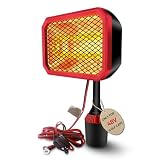
Gociean 48V 400W heater
Another 48V option to compare, particularly if you want a direct battery-powered heater without propane.
How electric heat affects range
An electric heater converts stored battery energy into heat, so using it reduces the energy available for driving. The practical impact depends on heater wattage, battery capacity, temperature, driving time, and battery condition. Cold weather already reduces effective battery performance, so range loss can feel more noticeable in winter.
Do not tap a single battery
On a multi-battery pack, avoid powering a high-draw heater from one battery unless the system is designed for it. Uneven loading can unbalance the pack. Use the voltage and connection method specified for the heater and cart.
Electric vs propane heater
Electric heat avoids combustion, fuel cylinders, and ventilation concerns associated with propane. Propane can produce more heat without drawing from the traction battery, but it introduces flame, fuel storage, clearances, and ventilation requirements. For that category, see our propane heater guide.
Installation priorities
- Verify pack voltage with a meter or documentation.
- Follow the heater manufacturer’s fuse and wire guidance.
- Mount the heater where airflow is useful but moving controls remain clear.
- Protect cables from sharp edges and moving parts.
- Test the system while monitoring connectors for abnormal heat.
Estimate heater current before wiring
Heater wattage can be converted into approximate current draw by dividing watts by system voltage. A 400W heater on a 48V system draws roughly 8.3 amps before accounting for losses; on 36V it would draw roughly 11.1 amps. That is why wire gauge, connectors, switches, and fuses should be selected for the actual heater and installation rather than copied from a small accessory circuit.
Cold batteries and heater performance
Battery performance changes in low temperatures, which is exactly when the heater is used most. A weak lead-acid pack can show more voltage sag under simultaneous driving and heating loads. Lithium packs may also have low-temperature charge restrictions depending on the BMS. The heater itself may work normally while the cart’s available driving range is reduced, so winter trip planning should include both heater use and battery condition.
When professional installation is worthwhile
If the heater requires high-current wiring, a reducer, a new fused distribution block, or routing through tight body areas, professional installation can be worthwhile. Poor crimps and undersized wire create heat at connections. Any connector that becomes hot, discolored, or soft during operation should be treated as a fault, not as normal heater behavior.
Bottom line
Choose an electric golf cart heater by voltage first, wattage second, and installation quality third. A correctly wired 36V or 48V heater is a cleaner solution than adapting the wrong-voltage unit or tapping a single battery in the pack.
