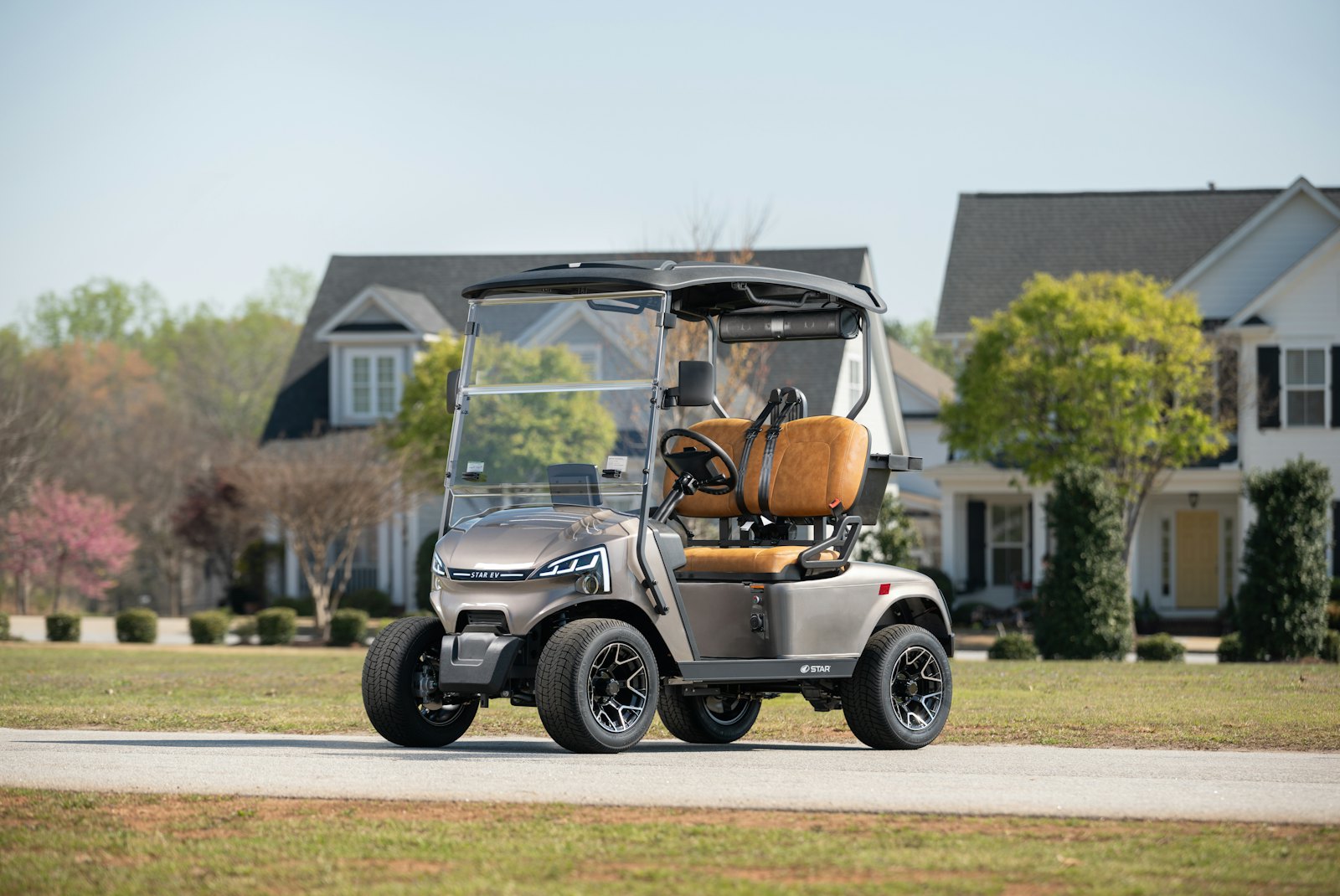
The current Yamaha Drive2 PTV lineup gives buyers three powertrain choices: QuieTech EFI gas, PowerTech AC with lead-acid batteries, and PowerTech Li with a lithium battery. The best option depends on where you drive, how you charge or fuel the cart, maintenance preferences, noise, weight, purchase price, and how often the cart sits between uses.
Current Drive2 gas vs electric lineup
For 2027, Yamaha lists the Drive2 PTV QuieTech EFI as the gas model, PowerTech AC as the conventional electric model, and PowerTech Li as the lithium-electric model. They share the same basic Drive2 PTV platform but differ significantly in power source, curb weight, charging or fueling, and maintenance.
Powertrain comparison
| Drive2 PTV | Power source | Current key spec |
|---|---|---|
| QuieTech EFI | 357cc EFI gas engine | 19.0 mph; estimated 45 mpg |
| PowerTech AC | 48V AC motor, lead-acid pack | 19.5 mph; six 8V batteries standard |
| PowerTech Li | 48V AC motor, lithium battery | 19.5 mph; single lithium battery |
Gas Drive2: QuieTech EFI
The 2027 QuieTech EFI uses Yamaha’s 357cc single-cylinder EFI engine. Yamaha lists a 5.8-gallon fuel capacity and an estimated 45 mpg. The current PTV specification shows a 19.0 mph maximum forward speed and a curb weight of about 787 lb.
Gas is attractive when the cart is used where charging access is limited or when quick refueling is more convenient than plugging in. It also avoids traction-battery replacement, but it introduces engine oil, fuel, air-filter, spark, belt, exhaust, and other engine-related maintenance.
Lead-acid electric Drive2: PowerTech AC
The 2027 PowerTech AC uses a 48V AC motor. Yamaha lists six 8V Trojan T875 flooded batteries as standard, with other battery options depending on configuration. The PTV version is rated at 19.5 mph and weighs about 1,058 lb with the standard equipment and fluids/batteries included in curb weight.
The main advantages are quiet operation, no gasoline storage, and simple daily use when overnight charging is easy. The tradeoff is battery maintenance and pack weight. Flooded lead-acid batteries require correct charging, terminal care, and watering where applicable.
Lithium electric Drive2: PowerTech Li
The PowerTech Li uses the same basic 48V AC electric concept but replaces the multi-battery lead-acid pack with a single lithium-ion battery. Yamaha currently lists a 19.5 mph maximum speed and a curb weight of about 805 lb, which is far lighter than the lead-acid AC version.
Lithium is the lowest-maintenance electric option because there is no flooded-battery watering. It also avoids the weight of a six-battery lead-acid pack. The tradeoff is a much higher initial purchase price.
Which one is quietest?
Both electric models are quieter than a gas engine during normal driving. Yamaha’s QuieTech system is specifically designed to reduce gas-cart noise and is unusually refined for a gasoline golf cart, but it still has an engine, exhaust, and starter-generator system. If minimum drivetrain noise is the priority, electric remains the simpler choice.
Which one is cheaper to buy?
Yamaha’s current 2027 starting MSRP is about $9,899 for QuieTech EFI, $10,549 for PowerTech AC, and $14,020 for PowerTech Li. Dealer pricing, destination, preparation, taxes, accessories, and local availability can change the actual purchase cost.
Which one is easier to maintain?
Lithium electric requires the least routine battery maintenance. Lead-acid electric eliminates engine service but still needs battery care. Gas avoids traction-battery maintenance but adds engine oil, fuel-system, air-filter, spark, belt, and other gasoline-powertrain service. “Low maintenance” depends on which tasks you would rather own.
Which one is best if the cart sits for long periods?
Storage preparation matters for all three. Lead-acid batteries should not be left partially discharged for long periods. Lithium packs have their own storage and charging requirements, while gas carts need attention to the starting battery and fuel condition. Follow the Yamaha owner manual for the exact powertrain instead of using generic seasonal-storage advice.
Gas vs electric for hills
Do not choose from the word “gas” or “electric” alone. Payload, grade, tire size, state of charge, battery condition, and controller calibration all affect hill performance. The current PowerTech AC and Li PTV models use a 6.7 hp rated AC motor, while QuieTech EFI uses the 357cc gasoline engine. Test-drive the configuration under conditions similar to your actual route when hills are a major concern.
Which one is better for neighborhood driving?
Electric is usually easier for short frequent trips because you can plug in at home, operation is quiet, and there is no fuel to carry. Lithium further reduces maintenance and pack weight. Gas makes more sense when charging is inconvenient, the cart travels long irregular routes, or rapid refueling matters.
Which one is better for a vacation or seasonal property?
The answer depends on infrastructure. A property with reliable power and an owner who follows charging/storage instructions is well suited to electric. A remote property with unreliable charging may favor gas. Lithium can be attractive for seasonal owners who want less routine battery maintenance, but correct long-term storage still matters.
Do gas and electric Drive2 accessories fit the same?
Some body accessories overlap, but powertrain and chassis details can still affect fitment. Electrical accessories need the correct power source and reducer strategy, while suspension, under-seat, and service-access components may differ. Always verify the product against the exact Drive2 year and powertrain.
For dimensions and current specifications, see our Yamaha Drive2 dimensions and specs guide. For upgrades, see our Drive2 accessories guide.
Bottom line
Choose QuieTech EFI when easy refueling and independence from charging matter most. Choose PowerTech AC when you want quiet electric operation at a lower purchase price than lithium and are comfortable maintaining a lead-acid pack. Choose PowerTech Li when low routine maintenance, lower battery weight, and electric operation justify the higher upfront cost.
Related: QuieTech vs standard Drive2 gas.