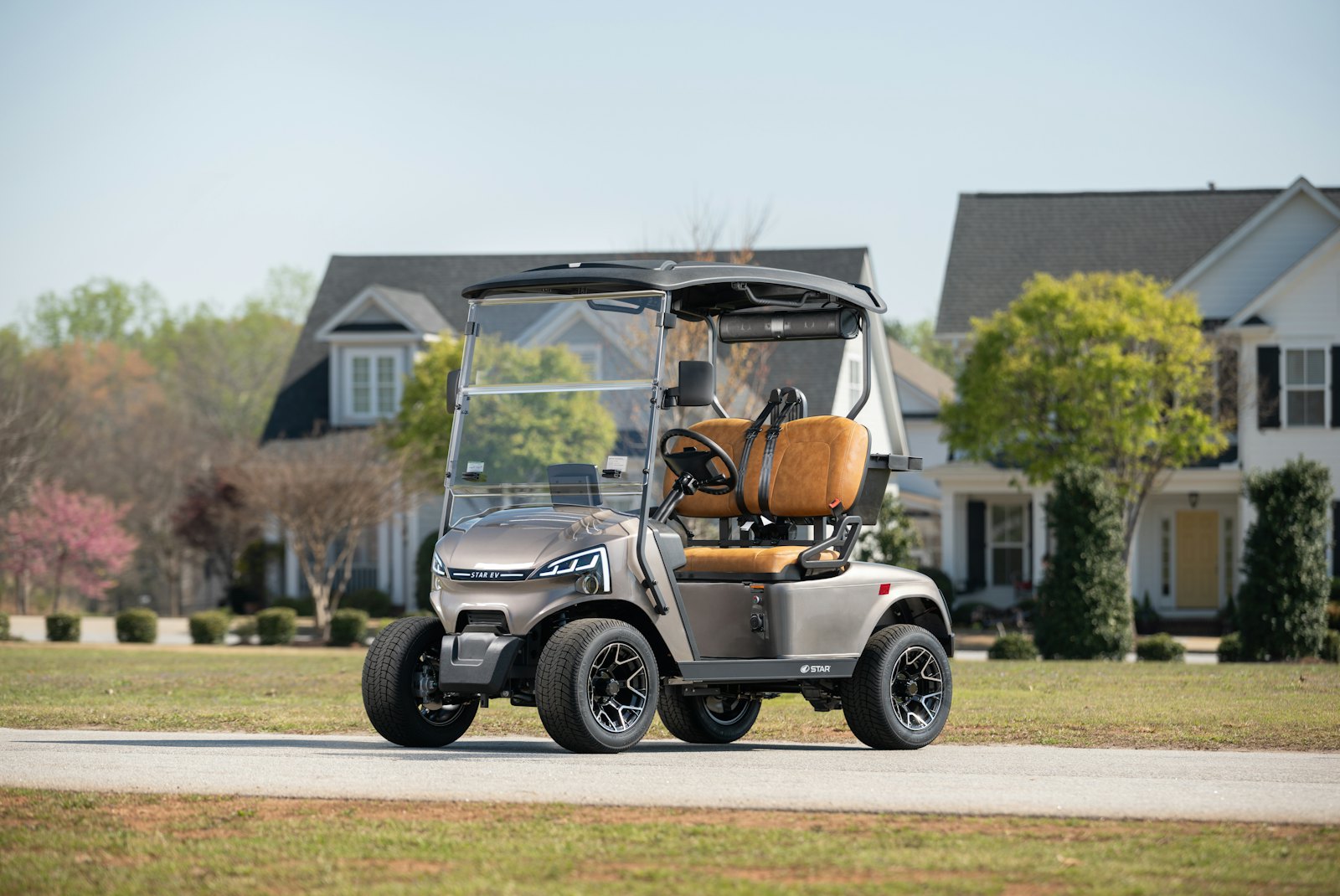
Installing seat belts on a golf cart is not just a matter of drilling two holes and bolting in a belt. The belt, mounting bracket, seat structure, passenger position, and overall occupant-protection design need to work together. Use a model-specific kit or manufacturer-approved mounting system whenever possible.
First decide whether seat belts are appropriate
Not every open golf cart was designed around seat belts. E-Z-GO notes that standard golf carts and personal transportation vehicles are typically not equipped with seat belts and that belt use can involve a safety tradeoff unless the vehicle has the appropriate occupant-protection structure or cab. That makes vehicle-specific guidance important.
Use a kit made for the seating position
Front-seat and rear-seat belt brackets are different. A rear flip seat may require a bracket designed around its steel frame, while a front bench may use existing structural mounting points. Do not attach a seat belt only to thin body plastic, a decorative panel, or an unsupported seat cushion base.
Inspect the seat and frame first
Look for corrosion, cracked welds, loose rear-seat hardware, damaged frame members, or previous modifications. A strong belt mounted to a weak bracket does not create a safe restraint system.
If the cart has an aftermarket rear seat, check our rear-seat fitment guide.
Follow the bracket manufacturer’s mounting points
Use the supplied hardware, backing plates, spacers, and torque instructions. Mounting geometry matters because the lap belt should cross the passenger’s pelvis, not the abdomen, and the buckle should be reachable without twisting the belt.
Avoid improvised drilling
If the kit instructions do not identify a verified mounting point, do not create one just because metal is nearby. A thin sheet-metal surface can tear in a sudden load. When in doubt, use a golf-cart dealer or qualified fabrication shop familiar with the specific chassis.
Rear-seat passengers need extra attention
Rear-facing seat kits change passenger position and can affect how restraints work. Confirm that the belt kit is designed for that exact rear-seat frame and passenger orientation. Also verify that grab handles, footrests, and rear-seat hardware are secure.
See how to install a golf cart rear seat for the broader mounting checks.
Check local vehicle rules separately
Street-legal and low-speed-vehicle requirements vary by location. A golf cart used only on private property may be regulated differently from an LSV driven on public roads. Do not assume adding belts alone makes a cart street legal.
After installation
- Confirm every anchor is tight and uses the specified hardware.
- Pull firmly on each belt to check the anchor and retractor.
- Make sure buckles release normally.
- Keep belts away from hinges, sharp edges, and moving rear-seat parts.
- Recheck fasteners after initial use.
Bottom line
Install golf cart seat belts only with a mounting system designed for the cart and seating position. The strongest approach is a model-specific bracket using structural mounting points and manufacturer instructions, not generic drilling into whatever surface is convenient.